Climate & Energy
[ARCHIVE_INDEX] · loading entries . . .
Bill Gates Accomplishments
Loading accomplishments…
[ARCHIVE_INDEX] · loading entries . . .
Loading accomplishments…
[SUBFILE] · /events/climate-energy/ · access granted
Founding the TerraPower nuclear company in 2006, launching Breakthrough Energy in 2015, writing How to Avoid a Climate Disaster in 2021 — these 66verified milestones track Bill Gates's advanced nuclear, clean energy, and climate investments, including the Natrium reactor that broke ground in Wyoming.
[ARCHIVE_FUNDING] · INDEPENDENT · NO ADS
One developer. >300 verified entries. Zero ads. Forever free.
No sponsors, no paywall, no algorithm. If this archive has been useful to you, reader support is what keeps it running.
2026
Commonwealth Fusion Systems — backed by Bill Gates's Breakthrough Energy — hit a major hardware milestone heading into 2026, installing the first of 18 powerful high-temperature superconducting magnets in its SPARC tokamak near Boston. CFS is racing to achieve 'first plasma' in 2026 and net energy gain in 2027, aiming to prove that commercial fusion power is possible. It is among several fusion ventures Gates has funded in his long search for an 'energy miracle' to fight climate change.
2026
On April 23, 2026, Bill Gates's nuclear company TerraPower formally began nuclear construction of its first Natrium reactor in Kemmerer, Wyoming — billed as the first utility-scale advanced nuclear power plant built in the United States. The milestone followed the Nuclear Regulatory Commission's approval of the construction permit, and came after earlier work on non-nuclear facilities and a multi-year delay caused by the loss of Russian fuel supplies. The 345-megawatt sodium-cooled reactor, with molten-salt energy storage, is central to Gates's bet that next-generation nuclear can deliver clean, around-the-clock power.
March 2025
Breakthrough Energy Ventures backed Savor, a startup that produces butter using carbon dioxide and hydrogen — derived from atmospheric carbon and water — without any conventional agriculture, animals, or farmland. Savor's thermochemical process generates saturated fat with an identical molecular profile to dairy butter while using an estimated 99.9 percent less water and zero agricultural land. The product launched at Michelin-starred restaurants in 2025, with supermarket availability targeted for 2027, as part of Gates's broader bet on food-system decarbonisation.
2024
Breakthrough Energy Catalyst — Gates's industrial decarbonisation investment vehicle — committed $40 million to Deep Sky, a Quebec-based company developing commercial direct air capture facilities across Canada. The investment marked Catalyst's first in the DAC sector. Deep Sky's Alpha facility in Alberta is designed as a testing ground for multiple next-generation carbon removal technologies, with the goal of proving the cost trajectory needed to make DAC viable at planetary scale.

March 2024
Harvard University announced it was permanently abandoning the Stratospheric Controlled Perturbation Experiment — the small-scale stratospheric aerosol balloon experiment Gates had helped fund through FICER. Principal investigator Professor Frank Keutsch stated he was no longer pursuing the experiment, which would have released a tiny amount of calcium carbonate 12 miles above the Arctic. The cancellation came after years of public controversy, opposition from indigenous communities in Sweden where a test flight had been planned, and scientific debate about whether even small field experiments risked normalizing geoengineering before adequate governance frameworks existed.
November 2023
Breakthrough Energy Ventures led the first funding round for Graphyte, a carbon removal startup spun out of the ARPA-E-funded Rice University biomass-burial research, which compresses agricultural and forestry residues — rice hulls, sawmill waste, cotton gin trash — into dense, moisture-free blocks and buries them in dry geological formations for thousands of years. Unlike reforestation, which stores carbon temporarily in living trees, Graphyte's process is permanent and does not require ongoing land management. The company claimed a cost of under $100 per tonne at scale.
December 2023
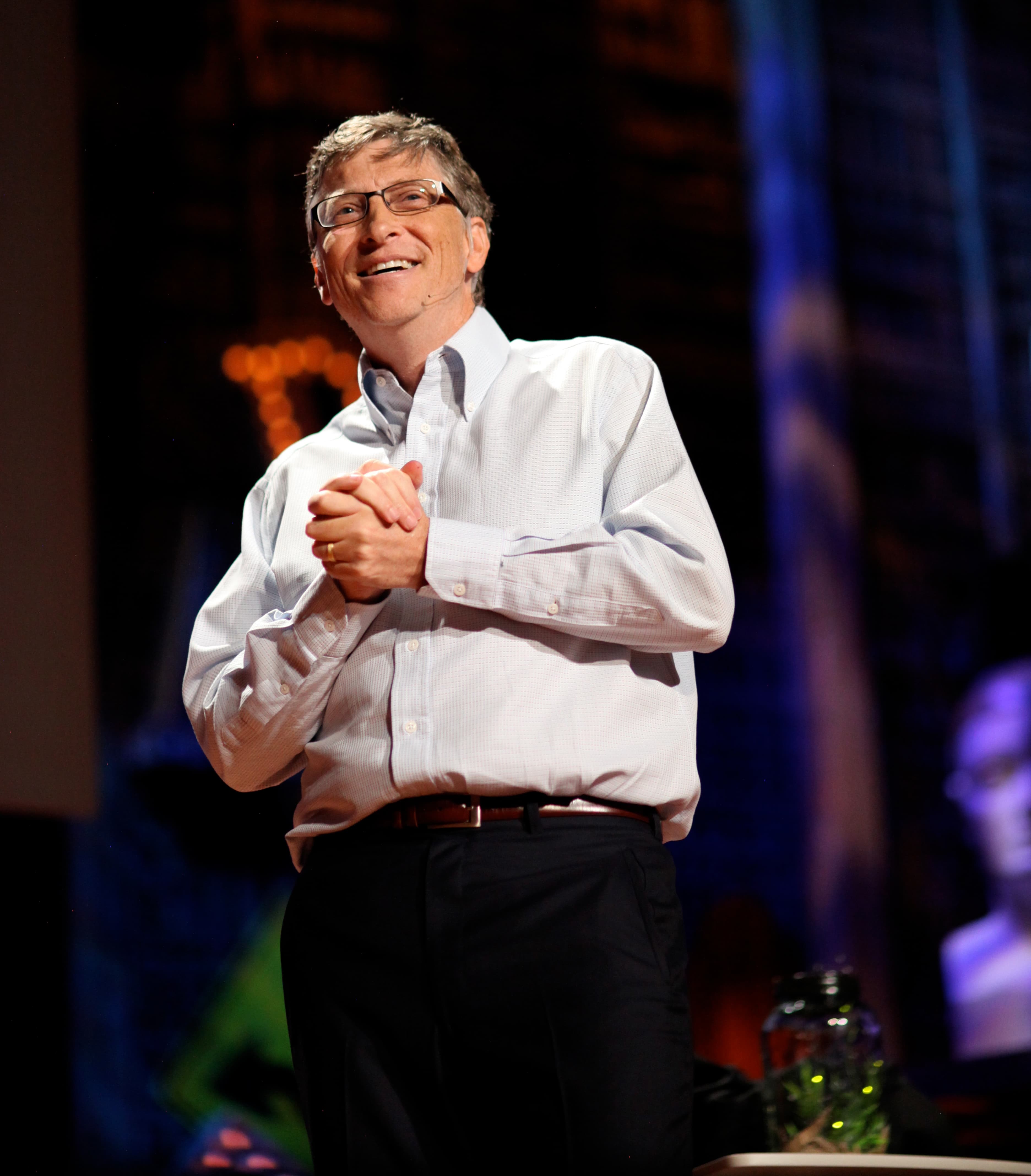
Breakthrough Energy backed a thermal storage startup using liquid tin — heated to over 1,400°C by excess solar and wind electricity — to store energy and deliver it as industrial-process heat. Liquid tin thermal storage offers significantly higher energy density than molten salt systems, requires no exotic materials, and operates at temperatures sufficient to replace fossil fuel combustion in the most energy-intensive manufacturing processes. The investment reflected Breakthrough Energy's strategy of diversifying across multiple thermal storage technologies to find the most cost-effective solutions for different industrial applications.
December 2, 2023
At COP28 in Dubai, Gates was among signatories of a declaration by 20 countries to triple global nuclear energy capacity by 2050. The announcement aligned with TerraPower's Natrium demonstration plant in Kemmerer, Wyoming, then under construction with $800 million in US Department of Energy funding. Gates argued nuclear is indispensable for a zero-carbon grid because it provides firm, weather-independent power.
June 2023
TerraPower broke ground on a Natrium demonstration reactor in Kemmerer, Wyoming — the first advanced nuclear reactor to begin construction in the United States in decades. Gates personally selected the former coal-mining town as the site to show that clean energy investment can revitalize fossil-fuel-dependent communities. The Natrium design uses a molten-salt heat storage system, allowing it to ramp output up and down to complement intermittent solar and wind generation.
2022
In 2022, Bill Gates's Breakthrough Energy made the first project investment from its Catalyst program — a $50 million grant to LanzaJet's Freedom Pines plant in Soperton, Georgia, the world's first commercial facility to make sustainable aviation fuel from ethanol via an 'alcohol-to-jet' process. Designed to cut aviation emissions by at least 70% versus fossil jet fuel, it embodied Gates's strategy of using catalytic funding to push first-of-a-kind clean technologies across the 'valley of death' to commercial scale.
2022
In December 2022, TerraPower — the advanced-nuclear company Bill Gates founded and chairs — announced that its first Natrium demonstration reactor in Kemmerer, Wyoming would be delayed by at least two years. The reason: the only commercial source of the specialized HALEU (high-assay, low-enriched uranium) fuel the reactor needs was Russia, and Russia's invasion of Ukraine had cut off that supply. The setback underscored both the West's dependence on Russian nuclear fuel and the practical hurdles facing Gates's bet on next-generation nuclear power.
February 2022
On February 2, 2022, Verdox raised $80 million led by Breakthrough Energy Ventures alongside Prelude Ventures and Lowercarbon Capital to commercialise its MIT-developed electrochemical carbon removal technology. Unlike thermal carbon capture systems requiring large amounts of heat and water, Verdox's electrochemical process selectively captures and releases CO₂ using targeted electrical energy at any atmospheric concentration, eliminating the need for heat regeneration. The technology was developed at MIT's Department of Chemical Engineering and is scalable to direct air capture applications.
2022
Breakthrough Energy Ventures co-led a $50 million Series A for Antora Energy alongside Lowercarbon Capital, funding Antora's solid carbon thermal storage blocks that absorb excess renewable electricity as heat and re-emit electricity via thermophotovoltaic cells — capable of delivering round-the-clock zero-carbon industrial heat and power. Antora subsequently raised $150 million in a 2024 Series B with continued BEV participation, bringing total funding to over $230 million. The technology also received grants from the California Energy Commission and ARPA-E.
February 2022
Breakthrough Energy Ventures and Energy Impact Partners co-led a $22 million Series A for Rondo Energy, whose 'Heat Battery' converts surplus renewable electricity into continuous high-temperature industrial heat up to 1,500°C — targeting cement, chemicals, food processing, and water desalination. Industrial heat accounts for roughly 20 percent of global CO₂ emissions with no prior viable renewable solution. Rondo subsequently raised a $60 million Series B and secured a €75 million project-finance facility from Breakthrough Energy Catalyst and the European Investment Bank.
2022
Breakthrough Energy Ventures invested in Antora Energy, a company that stores electricity from solar and wind in ultra-hot carbon blocks — heated to over 1,800°C — and delivers that heat and light directly to industrial manufacturing processes. Antora's solid-state thermal storage requires no exotic materials, using abundant carbon in a system that can be scaled to gigawatt-hour capacities. The technology is specifically designed to decarbonize the hardest industrial processes — steel, chemicals, and cement — where direct electrification is impractical and renewable heat storage is the only viable path to zero emissions.
2022
Breakthrough Energy Ventures backed Rondo Energy, which developed a heat battery that stores intermittent renewable electricity — including solar — as high-temperature thermal energy in firebricks, then delivers the heat on demand to industrial processes that currently rely on fossil fuel combustion. Industrial heat accounts for roughly 20% of global greenhouse gas emissions and has been extremely difficult to electrify directly. Rondo's technology enables solar and wind power to decarbonize cement kilns, food processing, paper mills, and chemical plants that require continuous high-temperature heat.
2022
Gates-linked funding supported research into marine cloud brightening — a geoengineering technique spraying fine sea salt aerosols into low-lying ocean clouds to increase reflectivity and reduce sunlight reaching Earth's surface. Unlike stratospheric aerosol injection, marine cloud brightening operates at lower altitudes and is more locally reversible. Research teams at the University of Washington studied it as a potential regional cooling tool to protect coral reefs from warming-induced bleaching. Gates has argued studying all geoengineering approaches is a moral obligation given the pace of climate change.
January 27, 2022
Breakthrough Energy Ventures closed its second fund at $2 billion, the largest dedicated climate technology venture fund in history at that time. Co-investors included Jeff Bezos, Masayoshi Son, Michael Bloomberg, and Richard Branson. The fund expanded beyond its original sectors to include sustainable agriculture, industrial decarbonization, and ocean carbon removal.
2021
In a February 2021 interview with MIT Technology Review promoting his book 'How to Avoid a Climate Disaster,' Bill Gates said that 'all rich countries should move to 100% synthetic beef' to curb the greenhouse-gas emissions of cattle, while suggesting the world's poorest countries would keep eating conventional meat. Critics derided the remark as elitist and out of touch — and noted a potential conflict of interest, since Gates is an investor in plant-based and lab-grown meat companies such as Impossible Foods and Beyond Meat that stand to profit from such a shift. The comment, widely circulated, became a recurring example of perceived hypocrisy given Gates's own resource-intensive lifestyle and vast farmland holdings.
2021
In his 2021 book 'How to Avoid a Climate Disaster,' Bill Gates popularized the concept of the 'Green Premium' — the extra cost of choosing a clean, zero-carbon option over the cheaper carbon-emitting one (for example, the price gap between ordinary jet fuel and zero-carbon aviation fuel). Gates argued that the central task of climate policy and innovation is to drive those premiums toward zero so green choices become the obvious ones worldwide. The framework became his signature way of explaining where clean technology is ready and where breakthroughs are still needed.
September 2021
Breakthrough Energy Ventures led a $53 million Series B for Iron Ox, a California startup operating fully autonomous hydroponic greenhouse farms where robot arms transplant and harvest leafy greens with zero tillage and no pesticides. Indoor vertical farming produces roughly 100 times more food per acre than conventional field farming, eliminating the need to clear new agricultural land for food production — a leading driver of tropical deforestation. Iron Ox's model targets high-value salad crops grown near urban markets to reduce transport emissions alongside land-use impacts.
June 2021
Breakthrough Energy Ventures closed its second fund at $2 billion, doubling the size of its inaugural vehicle. BEV continued targeting companies with at least two gigatons of annual CO2 reduction potential. Second-fund portfolio companies included Commonwealth Fusion Systems (nuclear fusion), Brimstone Energy (carbon-negative cement), and Noon Energy (long-duration storage). The fund drew capital from sovereign wealth funds and institutional investors alongside the original coalition partners.
June 2021
A planned test flight of the Gates-funded SCoPEx geoengineering experiment from Esrange Space Center in Kiruna, Sweden was cancelled following strong opposition from the Saami Council — representing the indigenous Sami people of Scandinavia — and Swedish environmental organizations. Critics argued the experiment lacked proper governance and public consent, and set a dangerous precedent for unilateral geoengineering field research. The episode accelerated international discussions about who has authority to authorize geoengineering experiments.
2021
Gates has consistently argued in 'How to Avoid a Climate Disaster' and public interviews that solar geoengineering research is a necessary field of study even though he has serious reservations about actual deployment. He stated that if the world fails to cut emissions fast enough, some form of deliberate climate intervention may become unavoidable, and that studying the risks and governance challenges in advance is better than being caught without any knowledge base in a climate emergency. His position places him among a small minority of prominent technology figures willing to publicly defend geoengineering research funding.
November 2, 2021
At COP26 in Glasgow, Gates participated in the Mission Innovation commitment by 22 governments to double public clean energy R&D spending, and announced $130 million in new Breakthrough Energy grants. He argued in multiple forums that private-sector innovation — not only policy mandates — is critical to reaching net-zero emissions by 2050.
February 16, 2021
Simultaneous with the publication of 'How to Avoid a Climate Disaster,' Gates announced Breakthrough Energy Catalyst — a $1.5 billion initiative blending philanthropic and government capital to de-risk early commercial projects in green hydrogen, direct air capture, long-duration storage, and sustainable aviation fuel. The program is designed to drive down green premiums for technologies that lack sufficient private investment.
2021
Breakthrough Energy Ventures backed Quaise Energy, which uses high-powered gyrotron beams to vaporize rock and drill geothermal wells 10–20 km deep — reaching temperatures sufficient to generate steam for any existing power plant. The technology could enable geothermal energy almost anywhere on Earth, not just in volcanic regions. Quaise claims it could repurpose coal and gas plants for geothermal power without new grid infrastructure.
May 2021
Breakthrough Energy Ventures led a $120 million Series C in Boston Metal, an MIT spin-out using electrolysis to produce carbon-free steel. Traditional blast furnace steelmaking accounts for roughly 8% of global CO₂ emissions. Boston Metal's process replaces coal with clean electricity, enabling zero-emission steel production. Gates has repeatedly named green steel as one of the hardest and most important decarbonization challenges.
November 30, 2021
Breakthrough Energy Ventures led a landmark $1.8 billion Series B investment in Commonwealth Fusion Systems (CFS), an MIT spin-out developing the SPARC compact fusion reactor. CFS achieved a world-record 20-tesla magnetic field using high-temperature superconducting magnets in September 2021, a critical milestone on the path to commercial fusion. Gates called fusion 'the holy grail of clean energy.'
2020
In December 2020, Bill Gates's Breakthrough Energy Ventures led a funding round for ZeroAvia, a startup developing hydrogen-electric powertrains to fly aircraft with zero carbon emissions, joined by Amazon's Climate Pledge Fund and later British Airways and Shell. Part of Gates's strategy to decarbonize 'hard-to-solve' sectors like aviation, the backing helped ZeroAvia advance flight testing of hydrogen-powered planes and build out engine manufacturing near Seattle.
September 2020
Breakthrough Energy Ventures participated in a $5 million seed round for Pachama, a San Francisco-based startup using satellite imagery, lidar data, and machine learning to verify the carbon sequestration claims of forest protection projects before and after credit issuance. Pachama's platform directly addresses the fraud and double-counting problems that have undermined voluntary carbon markets; it also connects corporate buyers with verified reforestation and avoided-deforestation projects across Latin America and Africa.
March 2020
Breakthrough Energy Ventures led a $20 million investment in C16 Biosciences, a New York startup producing synthetic palm oil through precision fermentation of food waste. Conventional palm oil production is one of the leading drivers of tropical deforestation — responsible for an estimated 8 percent of global forest loss between 1990 and 2008 — and is used in roughly half of all packaged consumer products. C16's fermentation process requires no agricultural land and produces an oil with an equivalent fatty acid profile to conventional palm, targeting a $60 billion global market.
October 2020
The U.S. Department of Energy selected Gates's TerraPower as one of two companies to receive federal funding under the Advanced Reactor Demonstration Program. The DOE ultimately committed $1.7 billion to TerraPower's Natrium reactor project in Kemmerer, Wyoming. The Natrium design includes molten salt thermal storage enabling the plant to ramp output up or down in concert with renewable energy sources — a key advantage for grid integration.
2020
Gates Ag One and Breakthrough Energy Ventures co-invested in Pivot Bio, which engineers naturally occurring soil microbes to fix atmospheric nitrogen for crops — replacing synthetic nitrogen fertilizer whose production accounts for roughly 2% of global greenhouse gas emissions. Pivot Bio's products reached over 1 million acres of US corn by 2022 and have since expanded to wheat and other crops.
August 2020
Breakthrough Energy Ventures co-led a $200 million Series D in Form Energy, which is developing an iron-air battery capable of discharging over 100 hours — far longer than lithium-ion. The technology uses cheap, abundant iron and atmospheric oxygen, dramatically reducing material costs compared to other long-duration storage approaches. Long-duration storage is considered a prerequisite for a grid powered predominantly by wind and solar.
2019
A 2019 peer-reviewed study by Swedish researcher Stefan Gössling, examining the air travel of high-profile public figures, estimated that Bill Gates emitted roughly 1,600 tonnes of carbon dioxide from flying in a single year — among the highest of the celebrities studied and thousands of times the average person's annual footprint. The study, covered by The Guardian and others, cited Gates's frequent use of private jets and argued that the conspicuous travel of the wealthy normalizes high-carbon lifestyles. Gates, who has acknowledged his large personal carbon footprint and says he buys offsets and funds clean-energy solutions, became a recurring example in debates over climate hypocrisy among billionaire environmental advocates.
October 2019
Breakthrough Energy Ventures and SoftBank's SB Energy co-led a $30 million Series C for ESS Inc., an Oregon-based developer of long-duration iron flow batteries using only iron, salt, and water as electrolyte — abundant, non-toxic, and recyclable materials. The funding enabled ESS to automate its second-generation battery manufacturing targeting grid applications requiring 4–12 hours of storage duration where lithium-ion is uneconomical. ESS subsequently listed on the NYSE in October 2021.
2019
Breakthrough Energy Ventures — the climate investment fund chaired by Gates — invested in Pivot Bio, a San Francisco startup that applies a proprietary microbial coating directly to corn and wheat seeds. The microbes fix atmospheric nitrogen alongside the plant's roots, reducing or eliminating the need for synthetic nitrogen fertilisers. Pivot Bio's product cuts nitrous oxide emissions (a potent greenhouse gas) while maintaining yields — addressing both climate and food security goals.
2019
Gates funded the Stratospheric Controlled Perturbation Experiment (SCoPEx) at Harvard, designed to release a small quantity of calcium carbonate particles from a high-altitude scientific balloon to study how aerosols interact in the stratosphere. A planned 2021 test flight from Kiruna, Sweden was cancelled after the Saami Council and environmental groups objected to the lack of governance process and indigenous consent — spotlighting the regulatory vacuum around geoengineering field experiments.
2019
Breakthrough Energy and Gates-linked investors backed Apeel Sciences, a Santa Barbara-based company that developed an invisible, tasteless, edible coating derived from plant skins and seeds that dramatically slows the ripening and dehydration of fresh fruits and vegetables. Apeel-treated avocados, citrus, and other produce stay fresh two to three times longer without refrigeration — addressing one of the largest drivers of food waste. Roughly one-third of all food produced globally is lost or wasted, and extending shelf life in warm climates where refrigeration is scarce has enormous implications for both food security and greenhouse gas emissions from decomposing organic waste.
2019
Gates publicly argued that solar and wind energy had matured to the point where they no longer needed the same level of government subsidy that drove their initial deployment, and that redirecting clean energy incentives toward energy storage, green hydrogen, direct air capture, and industrial decarbonization would yield greater climate impact per dollar spent. He made the case in interviews, essays, and Breakthrough Energy materials that the hardest parts of the energy transition — not electricity generation but steel, cement, aviation, and agriculture — were receiving a fraction of the attention and capital they needed. The argument was influential in shaping Breakthrough Energy Catalyst's sector priorities.
2019
The U.S. Department of Energy tightened restrictions on civilian nuclear technology cooperation with China in 2018-2019, forcing TerraPower to abandon its agreement with the China National Nuclear Corporation to build the Traveling Wave Reactor demonstration plant. Gates publicly described the collapse as a significant setback that forced TerraPower to pivot to the United States as its demonstration site, eventually leading to the Natrium reactor project in Kemmerer, Wyoming. The episode highlighted the tension between commercial logic and U.S. national security concerns regarding advanced nuclear technology cooperation with China.
January 2019
Gates participated in multiple sessions at the World Economic Forum Annual Meeting in Davos in January 2019, presenting Goalkeepers SDG tracking data and discussing his growing climate investment portfolio through Breakthrough Energy Ventures. He used the Davos platform to call for dramatically increased private investment in climate innovation, meeting with heads of state and corporate leaders on the sidelines to encourage commitments to green technology R&D. Gates has been a regular annual Davos presence since 1996, using it to mobilize business leaders around global health and climate.
2019
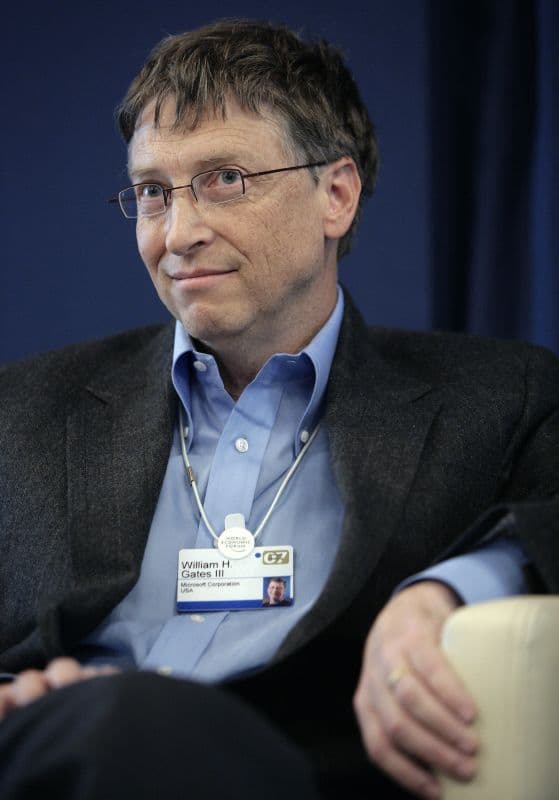
Cascade Investment was among early backers of Carbon Engineering, a Canadian direct air capture company. In 2023 Occidental Petroleum acquired Carbon Engineering for $1.1 billion to build the world's largest carbon removal plant in Texas. The acquisition was one of the largest transactions in the carbon capture industry and marked Gates's direct air capture investment thesis paying off commercially.
2019
Gates provided key funding for the Stratospheric Controlled Perturbation Experiment (SCoPEx) at Harvard University, which researches whether small amounts of reflective particles injected into the stratosphere could temporarily reduce global temperatures. Gates is one of the few prominent funders willing to support solar geoengineering research despite its controversy, arguing responsible study is necessary given climate risks.
2018
Bill Gates's Breakthrough Energy Ventures was an early backer of Fervo Energy, which applies oil-and-gas drilling techniques — horizontal drilling and fiber-optic sensing — to 'enhanced geothermal' power that taps heat deep underground. Among Breakthrough's first clean-energy bets in 2018, the investment fit Gates's search for firm, around-the-clock carbon-free electricity; Fervo went on to develop what it bills as the world's largest enhanced-geothermal project, in Utah, and Gates has predicted geothermal could one day supply a sizable share of global power.
December 2018
In December 2018, Breakthrough Energy Ventures led a $26 million Series A for Malta Inc. as it spun out of Alphabet's X moonshot laboratory. Malta's technology stores electricity as heat in giant tanks of molten salt at 565°C and cold in antifreeze fluid, enabling multi-day renewable energy storage at projected costs far below lithium-ion systems. Additional investors included Alfa Laval and Concord New Energy Group; Malta subsequently raised a $50 million Series B with continued BEV participation.
2018
Breakthrough Energy Ventures led the investment in Malta Inc, a Boston-based startup spun out of Alphabet's X lab that uses a molten-salt and antifreeze thermal storage system to store excess electricity from solar panels and wind turbines as heat and cold, then discharge it back as electricity on demand. The system heats salt to 565°C and cools an antifreeze solution to -70°C in insulated tanks — functioning like a giant rechargeable thermal battery. Malta's approach is designed for utility-scale grid storage at costs far lower than lithium-ion batteries, enabling solar and wind to power the grid around the clock.
2017
Gates provided significant funding to launch Harvard University's Solar Geoengineering Research Program, which studies stratospheric aerosol injection and marine cloud brightening as potential tools for reducing global temperatures. The program produced foundational governance frameworks for geoengineering field research and published peer-reviewed modeling on the risks and benefits of solar radiation management. Gates's backing sparked debate about private funders directing research with global geopolitical implications.
2017
TerraPower, Gates's nuclear energy company, reached a formal agreement with the China National Nuclear Corporation to develop and demonstrate a Traveling Wave Reactor in China — a fast neutron reactor that runs on depleted uranium waste rather than enriched fuel. The deal made China the initial host for the world's first TWR demonstration plant, reflecting the openness of Chinese nuclear regulators to new reactor designs. Gates described the partnership as an example of how U.S. technology and Chinese manufacturing scale could together address a global energy challenge.
2016
Breakthrough Energy Ventures, chaired by Gates, backed Apeel Sciences — a company that applies a plant-derived lipid coating to fresh produce, creating an invisible edible membrane that slows moisture loss and oxidation. Apeel extends the shelf life of avocados, citrus, and other produce by two to four times without refrigeration, reducing post-harvest food waste at retail. The technology has been adopted by major US and European grocery chains and addresses food loss — a major contributor to agricultural greenhouse gas emissions.
December 2016
Gates formally launched Breakthrough Energy Ventures (BEV) with approximately $1 billion committed from investors including Jeff Bezos, Jack Ma, Mukesh Ambani, and Richard Branson. BEV introduced a 20-year fund structure — far longer than typical venture capital — to match the development timelines of breakthrough energy technologies across electricity, transportation, buildings, manufacturing, and food and agriculture.
2016
Breakthrough Energy and allied investors backed Indigo Agriculture, a Boston-based company that coats seeds with beneficial soil microbes — naturally occurring fungi and bacteria — that help crops absorb nutrients more efficiently, resist drought and disease, and produce higher yields with less synthetic fertilizer and pesticide. Indigo's approach treats agricultural productivity as a biological systems problem rather than a chemical one, working with natural soil ecosystems rather than against them. By 2022 the company had reached millions of acres across North America and was expanding into South America and Australia.
December 12, 2016
Gates co-founded Breakthrough Energy Ventures at the COP21 Paris climate conference alongside Jeff Bezos, Jack Ma, Richard Branson, and other investors, committing over $1 billion to early-stage companies developing zero-carbon technologies. The fund targets energy storage, green hydrogen, sustainable agriculture, low-carbon cement, and other hard-to-abate sectors that existing venture capital largely ignores. Gates designed it around a 20-year patient capital model, recognizing that the path from lab to market in energy is far longer than in software.
2015
As Bill Gates built a reputation as a climate leader, his foundation's endowment continued to hold substantial investments in fossil-fuel companies, prompting The Guardian's 2015 'Keep It in the Ground' campaign — backed by hundreds of thousands of people — to call on the Gates Foundation to divest. Gates publicly rejected the divestment movement, calling it a 'false solution' that he said had reduced 'about zero' tonnes of emissions, and argued the real answer was investing in breakthrough clean-energy technology. The foundation later sold off most of its fossil-fuel holdings, including its stake in BP, though Gates maintained that divestment was the wrong strategy. Critics saw a tension between his climate advocacy and his investments.
November 30, 2015
On the opening day of the Paris climate conference, Gates convened 27 high-net-worth investors from ten countries to announce the Breakthrough Energy Coalition, pledging patient, long-term private capital for early-stage clean energy companies. The launch coordinated with Mission Innovation — a simultaneous pledge by 20 governments to double public clean energy R&D spending. Members included Jeff Bezos, Richard Branson, Jack Ma, and Mukesh Ambani.
November 30, 2015
Alongside President Obama and 19 other world leaders, Gates co-launched Mission Innovation at the COP21 Paris climate summit — a commitment by 22 governments to double their public clean energy research and development investments over five years, adding approximately $20 billion annually in new public clean energy R&D including solar. Gates simultaneously announced Breakthrough Energy Ventures to ensure that the innovation produced by this public investment had private capital waiting to commercialize it. He described the pairing of public R&D doubling with private innovation capital as the missing link in global clean energy strategy.
December 2015
Gates and President Obama met on the sidelines of the COP21 climate conference in Paris, where both were prominent voices pushing for an ambitious global climate agreement. Gates used the summit to co-launch Breakthrough Energy Ventures and Mission Innovation alongside world leaders. Obama later cited this meeting at Goalkeepers 2017, noting their shared conviction that private innovation and public policy must work in tandem on climate. The meeting reflected alignment between Gates's technology-first climate strategy and the Obama administration's clean energy agenda.
2013
Gates invested in Impossible Foods and other alternative protein companies, arguing that livestock agriculture — responsible for roughly 14.5% of global greenhouse gas emissions — could be transformed by plant-based and cultivated meat technologies. He wrote in 'How to Avoid a Climate Disaster' that wealthy nations should shift toward synthetic beef to dramatically reduce methane emissions. His public advocacy, backed by financial investment, helped legitimize alternative proteins as a serious climate mitigation strategy.
February 18, 2010
Gates delivered one of the most-viewed TED talks in the organization's history, titled 'Innovating to Zero.' He argued that achieving net-zero carbon emissions required a complete energy revolution, not incremental efficiency gains, and introduced his energy 'miracle' framework — the need for a new generation of technologies across electricity generation, transportation, buildings, industry, and agriculture. The talk introduced tens of millions of viewers to systems-level thinking about climate and energy, and directly preceded Gates's public advocacy for nuclear power through TerraPower, his Breakthrough Energy investments, and his 2021 book 'How to Avoid a Climate Disaster.' It has since accumulated over 45 million views.
2009
Gates made an early personal investment in Carbon Engineering, a Canadian startup founded by Harvard professor David Keith to develop technology that extracts CO2 directly from ambient air. The company later demonstrated a commercial-scale facility in British Columbia capable of capturing one megaton of CO2 per year. Carbon Engineering raised more than $100 million from subsequent investors and was acquired by Occidental Petroleum in 2023 for $1.1 billion.
2008
Gates co-founded TerraPower with former Microsoft CTO Nathan Myhrvold to develop the Traveling Wave Reactor — a nuclear design capable of running on spent fuel or depleted uranium, drastically reducing waste. The company later pivoted to the Natrium reactor, a sodium-cooled fast reactor paired with molten salt energy storage, and was selected for the U.S. Department of Energy's Advanced Reactor Demonstration Program in 2020 with $1.7 billion in federal funding.
2008
Gates co-founded TerraPower, a nuclear energy startup developing a Traveling Wave Reactor designed to run on depleted uranium waste rather than enriched uranium. The design addresses two of conventional nuclear energy's biggest problems: fuel cost and radioactive waste. Gates has described advanced nuclear power as one of the few technologies that can provide cheap, always-on, zero-carbon electricity at the scale the world needs to address climate change.
2007
Bill Gates began personally funding the Fund for Innovative Climate and Energy Research (FICER), channelling at least $4.5 million over three years to Harvard University researchers studying solar geoengineering — particularly the Stratospheric Controlled Perturbation Experiment (SCoPEx), which proposed releasing calcium carbonate aerosols at high altitude to reflect sunlight and slow warming. Gates's backing made Harvard's programme the best-funded academic geoengineering research effort in the world and placed him at the centre of international debate over deliberate climate intervention.
2007
Bill Gates personally funded FICER, administered by climate scientists Ken Caldeira at the Carnegie Institution and David Keith at the University of Calgary. Between 2007 and 2018 the fund distributed approximately $8.5 million across research projects exploring stratospheric aerosol injection, marine cloud brightening, and carbon removal. FICER was Gates's first major vehicle for geoengineering research and directly seeded Harvard's later Solar Geoengineering Research Program.
2007
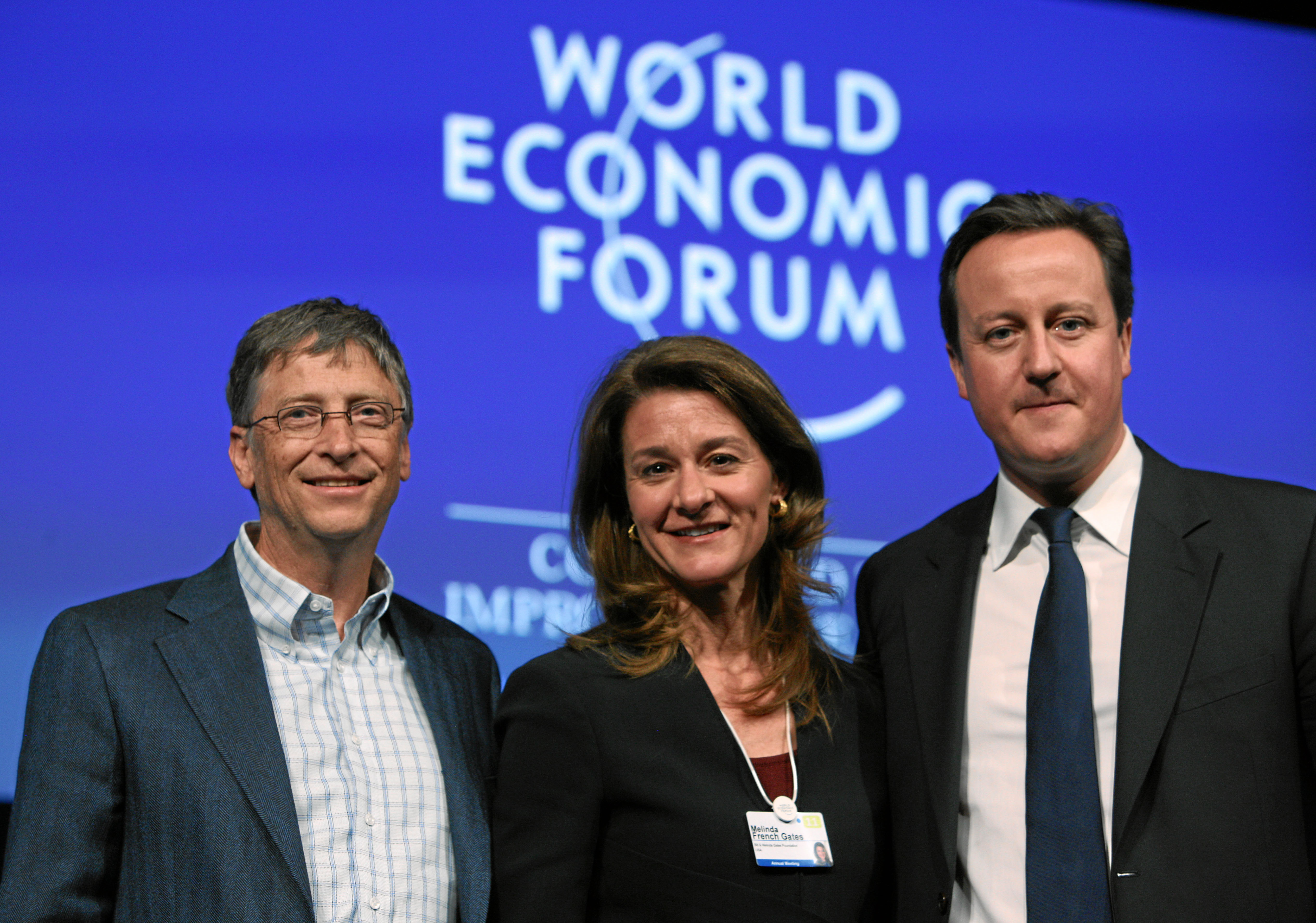
Gates co-created the Fund for Innovative Climate and Energy Research (FICER) with climate scientist Ken Caldeira, providing personal funding separate from the Gates Foundation to support research into solar geoengineering and other unconventional climate interventions. FICER became one of the first dedicated funding sources for solar radiation management research, supporting work at Harvard University and the Carnegie Institution for Science. Gates argued that responsible scientific investigation of geoengineering was necessary given the risk that emissions might remain too high despite mitigation efforts.
[RELATED_SUBFILES] · ls ../
node: archive-01 · link: encrypted · uptime: 99.98% · mirror: active
— EOF · nothing here is hidden, only documented —