Personal
1990s
[ARCHIVE_INDEX] · loading entries . . .
Loading accomplishments…
[SUBFILE] · /events/personal/ · access granted
Three bestselling books, the famous Harvard departure, a reading habit of roughly 50 books a year — these 143 verified entries cover the personal side of Bill Gates: family milestones, speeches, books, and the habits behind the career.
[ARCHIVE_FUNDING] · INDEPENDENT · NO ADS
One developer. >300 verified entries. Zero ads. Forever free.
No sponsors, no paywall, no algorithm. If this archive has been useful to you, reader support is what keeps it running.
1990s
Despite his reputation for frugality in some areas, Bill Gates has long indulged a passion for cars, assembling a collection that has included several Porsches — among them the 911 he has owned for decades and the storied 959 — as well as other classics. His automotive tastes, and the saga of importing the then-illegal 959, are among the more colorful footnotes of his personal life.
1990s
For years Bill Gates retreated twice a year to a secluded cabin for a solitary 'Think Week,' during which he read stacks of papers, books, and employee proposals with no interruptions, emerging with strategic memos that shaped Microsoft's direction. The ritual became famous as a model of deep, focused thinking by a busy executive, and was credited with helping spark major pivots — including Microsoft's embrace of the internet. Gates carried the habit of voracious, deliberate reading into his philanthropy.
1980s
Bill Gates and Apple's Steve Jobs were the defining rivals of the personal-computer age — collaborators turned antagonists who sparred for decades over who copied whom, from graphical interfaces to mobile devices. Their relationship swung between partnership (Microsoft built software for the Mac and rescued Apple in 1997) and sharp public jabs, and Gates spoke movingly of Jobs after his 2011 death.
1980s
Before marrying Melinda French, Bill Gates dated software entrepreneur and venture capitalist Ann Winblad, a relationship that evolved into an unusual, enduring friendship. The two reportedly continued an annual long-weekend retreat together — with Melinda's awareness — to discuss technology and big ideas, an arrangement Gates spoke about openly. Winblad, a pioneering woman in software and venture capital, was an intellectual peer whose influence Gates publicly acknowledged.
January 2026
Phoebe Gates, the youngest child of Bill Gates and Melinda French Gates, has drawn attention for Phia, the AI-powered shopping app she co-founded with Sophia Kianni. Launched in April 2025, Phia scans the web and secondhand marketplaces to find deals on fashion; by early 2026 it had surpassed a million users, grown revenue elevenfold, and raised more than $40 million — including a $35 million round — at a valuation around $185 million, backed by Kleiner Perkins, Kris Jenner, and Hailey Bieber. Notably, Phoebe took no money from her parents, saying she wanted to 'build something generational that has no ties to me, my privilege, or my last name.'
April 2026
Bill Gates made a rare red-carpet appearance with his girlfriend, philanthropist Paula Hurd, at the 12th Breakthrough Prize ceremony in Santa Monica, California, in April 2026. Gates, who confirmed on the Today show in early 2025 that he had a 'serious girlfriend,' has been seen with Hurd — the widow of former Oracle CEO Mark Hurd — at events including the 2024 Olympics and the Breakthrough Prize, and thanked her in the acknowledgments of his memoir 'Source Code.' Hurd chairs the Universal Tennis Foundation and is active in education philanthropy.
April 2026
In April 2026 the House Oversight Committee confirmed that Bill Gates would be interviewed as part of its Jeffrey Epstein investigation, while a planned appearance by Attorney General Pam Bondi was postponed. The scheduling set the stage for Gates's eventual June 10, 2026 closed-door interview. The committee was working through a roster of figures connected to Epstein, sequencing interviews and document requests over several months.
2026
Representative Nancy Mace, a member of the House Oversight Committee, publicly demanded that Bill Gates testify under oath about his relationship with Jeffrey Epstein, amplifying congressional pressure on the Microsoft co-founder after the Justice Department released Epstein-related documents. The demand was part of a broader Republican-led effort to question wealthy and powerful figures named in the files. Gates ultimately appeared for a closed-door transcribed interview rather than public sworn testimony.
February 2026
After the U.S. Justice Department released roughly three million Epstein-related files on January 30, 2026, attention focused on draft emails Jeffrey Epstein apparently wrote to himself in 2013 claiming — without evidence — that he had arranged sexual encounters for Bill Gates and helped Gates obtain medication to hide a sexually transmitted infection from Melinda French Gates. A spokesperson for Gates called the allegations 'absolutely absurd and completely false,' saying the unsent drafts reflected Epstein's frustration at lacking a real relationship with Gates and 'the lengths he would go to entrap and defame.' Gates said the email 'was never sent' and is 'false.' The claims were widely reported but remain uncorroborated.
February 2026
In February 2026 Bill Gates pulled out of delivering a keynote address at a major artificial-intelligence summit in India just hours before he was due on stage, even though he was already in the country and his attendance had been confirmed days earlier. The Gates Foundation said only that, 'to ensure the focus remains on the AI Summit's key priorities,' Gates would not deliver the keynote, and that the Foundation would instead be represented by a senior executive. The withdrawal followed a newly released tranche of Epstein-related files that renewed scrutiny of Gates's past association with the financier. The episode was widely covered as a sign of the reputational pressure the Epstein files were placing on Gates's public engagements.
June 2026
Following its June 2026 interview of Bill Gates, the House Oversight Committee signaled that its Epstein investigation would continue with interviews of other prominent figures connected to the late financier, reportedly including investment manager Leon Black, former Clinton aide Doug Band, and former Barclays chief executive Jes Staley. Additional interviews were said to be possible in July, potentially extending to attorney Alan Dershowitz and acting Attorney General Todd Blanche. The widening scope underscored that Gates was one of several wealthy and well-connected individuals whose dealings with Epstein the committee sought to document. Gates's own session was conducted behind closed doors, with a transcript to follow.
June 10, 2026
On June 10, 2026, Bill Gates sat for a closed-door interview with the U.S. House Oversight Committee as part of its investigation into Jeffrey Epstein, telling lawmakers that meeting Epstein was 'a grave error in judgment' and that he 'never witnessed nor had any indication that Epstein was engaged in ongoing criminal conduct.' Gates said Epstein had tried to use information about Gates's marital infidelities 'to pressure me to re-engage with him' — an attempt Gates described as unsuccessful — and stated he cut off contact in December 2014 after their fundraising discussions stalled. He maintained that his contact with Epstein, which began in 2011, had been aimed at raising money for global health. The interview was not recorded; the committee said it would release a transcript.
February 2026
In February 2026, Bill Gates addressed Gates Foundation staff at an all-hands town hall meeting, apologizing for the distraction and reputational harm caused by renewed coverage of his relationship with Jeffrey Epstein following the DOJ document release. According to attendees cited by Reuters and The Guardian, Gates stated he recognized his judgment had been 'badly mistaken' and that he understood why staff felt their work was being overshadowed. He committed to a third-party review of Foundation governance and said he would accept its recommendations.
February 2026
In a February 2026 interview with CBS News — her first extended television interview since the 2021 divorce — Melinda French Gates stated that learning of the full scope of Bill Gates's relationship with Jeffrey Epstein had caused her 'unbelievable sadness' and confirmed it was a key factor in her decision to end the marriage. She said she had first raised the issue with Gates directly after the October 2019 New York Times story. French Gates also praised the DOJ's document release as overdue transparency for Epstein's victims.
January 2026
In January 2026, the United States Department of Justice released approximately 3 million documents from its investigation of Jeffrey Epstein's sex-trafficking network, including emails, calendars, and financial records referencing Bill Gates's meetings with Epstein between 2011 and 2014. The documents confirmed the timeline reported by The New York Times in 2019, added detail on Epstein's internal communications about cultivating Gates, and showed that Epstein explicitly referenced his relationship with Gates when soliciting other donors and academic institutions. The release renewed public scrutiny of Gates and prompted the Gates Foundation to issue a public statement.
February 2026
Melinda French Gates publicly stated that Bill Gates has to answer for his ties to Jeffrey Epstein, in remarks reported weeks after a record $8 billion asset transfer to her following the divorce. Melinda had reportedly confronted Gates about his Epstein meetings — which she learned of through 2019 press coverage — and sources indicated the relationship was a factor in the deterioration of their marriage. Her public comments coincided with new congressional scrutiny of the Gates Foundation and the announcement of an independent board investigation into Epstein-related donations.
2025
In his 2025 memoir 'Source Code: My Beginnings,' Bill Gates wrote that 'if I were growing up today, I probably would be diagnosed on the autism spectrum.' Reflecting on a childhood in which his parents 'struggled with their complicated son,' Gates noted that neurodivergence was poorly understood at the time and the term itself would not be coined until the 1990s. The candid disclosure — which he chose to address explicitly in the book's epilogue — was widely covered as a notable public reflection on neurodiversity by one of the world's most recognizable figures.
May 2025
In May 2025 Bill Gates visited Jakarta, where he was welcomed at the Merdeka Palace by Indonesian President Prabowo Subianto for talks centered on reducing child mortality. Gates praised Indonesia's role in regional vaccine manufacturing through Bio Farma and its investments in digital public infrastructure, and signaled support for the country's new universal free school-lunch program and for testing a Gates-backed tuberculosis vaccine in Indonesia. The visit reflected the foundation's deepening engagement with Southeast Asia's most populous nation on health and nutrition.
2025
Bill Gates has embraced life as a grandfather: his eldest child, Jennifer Gates Nassar — now a physician who earned her medical degree from the Icahn School of Medicine at Mount Sinai in 2024 and began a pediatric residency — and her husband Nayel Nassar welcomed daughters Leila (2023) and Mia (2024). Gates has said becoming a grandparent 'has given me a whole new lens to see the world through' and that it keeps him motivated to ensure his grandchildren 'inherit a better world than they were born into.' The reflections accompanied his stated plan to leave his children only a small fraction of his fortune.
January 2025
Bill Gates revealed that he had a roughly three-hour dinner with Donald Trump at Mar-a-Lago on December 27, 2024, and came away 'frankly impressed' by the president-elect. Gates said he used the private meeting to press the case for continued investment in global health — discussing HIV, polio, energy, and nuclear technology — and found Trump genuinely engaged rather than dismissive. The dinner, attended only by the two men and an aide each, came as Gates sought to preserve support for foreign aid amid the incoming administration's plans to slash it. Their cordial tone contrasted with later clashes over USAID cuts.
May 2025
In May 2025 Bill Gates released his annual summer reading list, an eclectic set of five memoirs he called among 'the best memoirs I've read' — fitting, as he had just published his own memoir, 'Source Code,' in February. His picks included Katharine Graham's 'Personal History,' Nicholas Kristof's 'Chasing Hope,' Trevor Noah's 'Born a Crime,' and Bono's 'Surrender.' Gates said reading great memoirs helped him think about how to be open about his own challenges, and praised the books as reminders that 'great leaders can come from unexpected places.'
April 2025
In April 2025 Bill Gates said his three children — Jennifer, Rory, and Phoebe — would inherit 'less than 1 percent' of his fortune, a sum that, given his roughly $100-plus billion net worth, still amounts to more than $1 billion each. 'I decided it wouldn't be a favor to them' to leave a vast inheritance, Gates said, adding, 'It's not a dynasty, I'm not asking them to run Microsoft. I want to give them a chance to have their own earnings and success.' The remarks aligned with his pledge to give away nearly all of his wealth through the Gates Foundation.
February 2025
Bill Gates's memoir 'Source Code: My Beginnings,' published February 4, 2025, is the first of a planned three-volume autobiography: the debut covers his childhood and the founding of Microsoft, with later books intended to address his Microsoft years and his philanthropy. The candid first installment debuted at number one on the New York Times bestseller list and reflected on his family, his competitiveness, and his early life. Gates has said the milestones of turning 70 and Microsoft turning 50 prompted him to look back.
March 2025
Bill Gates met Indian Prime Minister Narendra Modi in New Delhi to discuss technology, health, agriculture, and India's long-term development goals, with Gates praising the country's innovations in global health and digital public infrastructure. The Gates Foundation has worked with the Indian government for two decades on healthcare, agriculture, and digital transformation, including AI tools that support rural health workers. The meeting reflected India's growing centrality to Gates's philanthropy and technology interests.
October 28, 2025
Bill Gates turned 70 on October 28, 2025, a milestone he marked with public reflection on his life, his legacy, and the next phase of his philanthropy. Saying that reaching 70 — as Microsoft turned 50 — finally prompted him to 'look back a bit,' Gates had published 'Source Code,' the first installment of a planned two-part memoir, earlier in the year. He also signaled a growing personal interest in neuroscience and brain health, shaped in part by his father's experience with Alzheimer's disease. The birthday coincided with Gates's accelerated push to give away nearly all of his fortune before the Gates Foundation's planned closure in 2045.
October 2025
A civil lawsuit filed by seven Dutch plaintiffs who say they were injured by COVID-19 vaccines names Bill Gates alongside former Dutch prime minister and NATO Secretary General Mark Rutte, Pfizer CEO Albert Bourla, members of the Netherlands' COVID-19 Outbreak Management Team, and the Dutch State, alleging they misled the public about vaccine safety. A court in the Northern Netherlands ruled it has jurisdiction to hear the case, allowing the civil proceedings to move forward. Widely shared online claims that Gates had 'lost,' been 'indicted,' or been 'ordered to stand trial in person' are unsupported: fact-checkers note the matter is an unresolved civil suit, not a criminal trial, and that it is unlikely Gates will personally appear. The case had drawn little mainstream coverage despite reaching more than a million views on social media.

February 4, 2025
Gates published his first memoir, 'Source Code: My Beginnings,' covering his childhood in Seattle, early passion for computing, Harvard years, and the founding of Microsoft. The book offered candid reflections on his relationship with his parents, his intensely competitive drive, and the experiences that shaped his worldview. It debuted at number one on the New York Times bestseller list.
2024
Bill Gates has a confession that sits awkwardly with his climate crusade: 'Cheeseburgers are my favorite food,' he has written, 'but I wish they weren't.' A well-documented fan of fast food, Gates loves the animal fat that makes a real beef burger taste good — even as he warns that beef's methane footprint is a climate problem and invests in plant-based and lab-grown alternatives trying to recreate it. The tension between his palate and his principles has become a recurring, self-aware theme in his writing.
2024
In September 2024 Netflix premiered 'What's Next? The Future with Bill Gates,' a five-part documentary series executive-produced by Oscar winner Morgan Neville, in which Gates explores pressing global questions: the promise and peril of artificial intelligence, misinformation, climate change, income inequality, and the future of disease. Featuring interviews with figures from scientists to celebrities, the series positioned Gates as a public explainer of the forces shaping the coming decades.
October 2024
In an October 2024 interview with Brazilian media outlet Agência Brasil, Bill Gates expressed concern about political swings threatening Amazon protection, noting that deforestation in the Amazon risks triggering a 'tipping point' that could turn large sections of rainforest into savannah within decades — with catastrophic consequences for global rainfall patterns and biodiversity. Gates praised Brazil's deforestation enforcement under the current administration but warned that durable forest protection required structural economic alternatives for communities dependent on forest clearing.
January 2024
A trove of documents unsealed in January 2024 from the civil lawsuit Giuffre v. Ghislaine Maxwell — hundreds of pages of depositions, emails, and correspondence — provided additional detail on Epstein's extensive network of associates. The documents referenced interactions within Epstein's circle that overlapped with people connected to Gates, including Boris Nikolic and others within the Gates science and philanthropy networks. The releases renewed public scrutiny of the full scope of the Gates-Epstein relationship.
2023
Over decades of Gates Foundation work in China, Bill Gates built unusually warm ties with the country's leadership. In June 2023 President Xi Jinping welcomed him to Beijing as an 'old friend' — a designation China reserves for favored foreigners — making Gates the first American business figure Xi had met privately in years. Xi had earlier thanked Gates personally for the foundation's COVID-19 funding. The closeness has drawn both praise as pragmatic engagement and criticism from those wary of legitimizing Beijing; Gates frames it as essential to global-health cooperation.
2023
After his 2021 divorce from Melinda French Gates, Bill Gates went public in 2023 with a new relationship: Paula Hurd, an event planner and philanthropist and the widow of Oracle's former co-CEO Mark Hurd, who died in 2019. The two had been seen together at tennis tournaments since 2021 and made their red-carpet debut at the Breakthrough Prize ceremony; Gates has called her his 'serious girlfriend.' Representatives have said the couple is not engaged despite periodic speculation.
May 2023
In May 2023, The Wall Street Journal reported — and other outlets corroborated — that Jeffrey Epstein had allegedly tried to blackmail Bill Gates in 2017, threatening to expose what the Journal described as a prior relationship between Gates and a Russian bridge player, Mila Antonova, whom Gates had met around 2010. According to the report, Epstein — who had separately paid for Antonova's coding-school tuition — sent Gates a thinly veiled threatening email after Gates declined to back Epstein's proposed charitable fund. Gates has denied any affair; a Gates Foundation spokesperson said he 'met with Epstein solely for philanthropic purposes' and that 'Epstein tried unsuccessfully to leverage a past relationship to threaten Mr Gates.' The allegations are based on reporting of Epstein's correspondence and remain unproven.
2023
Bill Gates has repeatedly faced accusations of hypocrisy for campaigning on climate change while flying on private jets, which are far more carbon-intensive than commercial travel. A 2019 Lund University study found Gates took 59 private-jet flights in 2017, generating at least 1,600 tons of CO2. Pressed on the criticism in a 2023 BBC interview, Gates argued he is 'not part of the problem,' saying he buys 'the gold standard' of carbon offsets through Climeworks direct-air capture and funds clean-energy innovation that, he said, far exceeds his footprint.
September 2023
In a September 2023 interview with The Times ahead of his book 'How to Avoid a Climate Disaster' press tour, Bill Gates stated that tree-planting campaigns promoted as mass climate solutions were 'complete nonsense' and 'a scam' unless accompanied by rigorous, permanent carbon accounting. Gates argued that the land required to offset global emissions through afforestation would consume an area larger than the continental United States, and that the focus should instead be on zero-carbon energy, green cement and steel, and direct air capture technologies he funds through Breakthrough Energy.
June 16, 2023
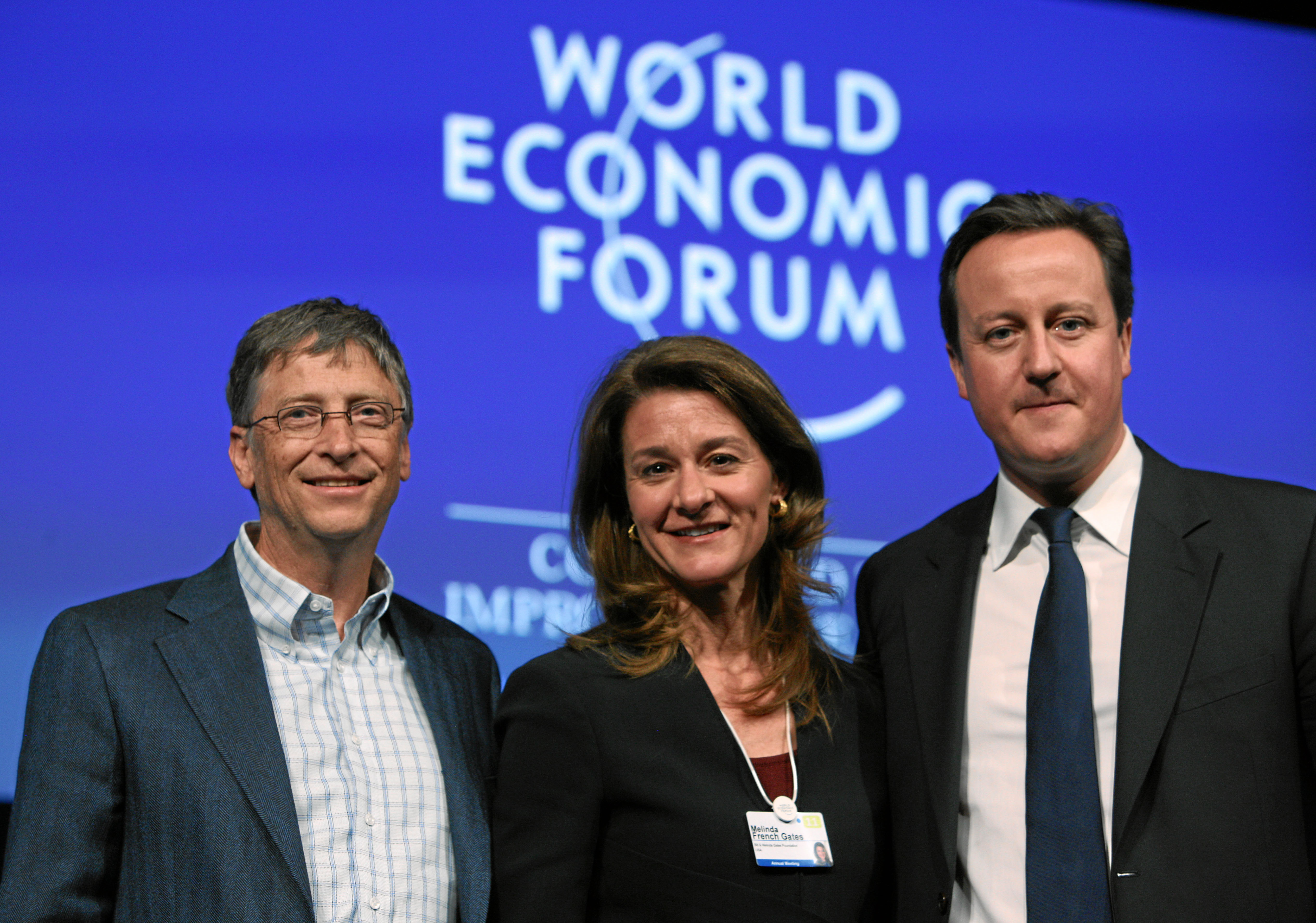
Gates met with Chinese President Xi Jinping at the Diaoyutai State Guesthouse in Beijing during a period of severely strained U.S.-China diplomatic relations. Xi greeted Gates as my old friend and described him as the first American leader to visit China following the deterioration of official bilateral ties. The meeting reflected Gates's long engagement with China on global health issues including polio eradication and COVID-19 response, and his unusual ability to maintain access across geopolitical divides at moments when official diplomacy had largely frozen.
June 16, 2023
Gates met with Chinese President Xi Jinping at the Diaoyutai State Guesthouse in Beijing during a period of severely strained U.S.-China diplomatic relations. Xi greeted Gates as 'my old friend' and described him as the first American leader to visit China following the deterioration of official bilateral ties. The meeting reflected Gates's long engagement with China on global health issues, including polio eradication and COVID-19 response, and his unusual ability to maintain back-channel access across geopolitical divides.
2022
An Indian court directed Bill Gates, the Serum Institute of India, and government officials to file formal responses to a petition brought by Dilip Lunawat, whose daughter Snehal — a doctor — died in 2021 of complications he attributes to the Covishield (AstraZeneca-formula) COVID-19 vaccine. The High Court of Judicature at Bombay set a hearing and response deadline in the case, which seeks damages. Contrary to recurring viral posts in 2025 and 2026 claiming that 'India is suing Bill Gates,' the matter is a private petition by a bereaved father, not an action brought by the Indian state, and fact-checkers have flagged the 'country sues Gates' framing as misleading. The Serum Institute has maintained that Covishield is safe and effective.
March 2022
In a CBS Mornings interview, Melinda Gates confirmed that Bill Gates's relationship with Jeffrey Epstein had been a contributing factor in their divorce. She stated: 'I did not like that he had meetings with Jeffrey Epstein, no. I made that clear to him.' She described having met Epstein once herself, calling the experience deeply disturbing: 'He was abhorrent. He was evil personified. I had nightmares about it afterwards.' Her comments were among the most direct public confirmations that the Epstein connection had damaged their marriage.
May 3, 2022
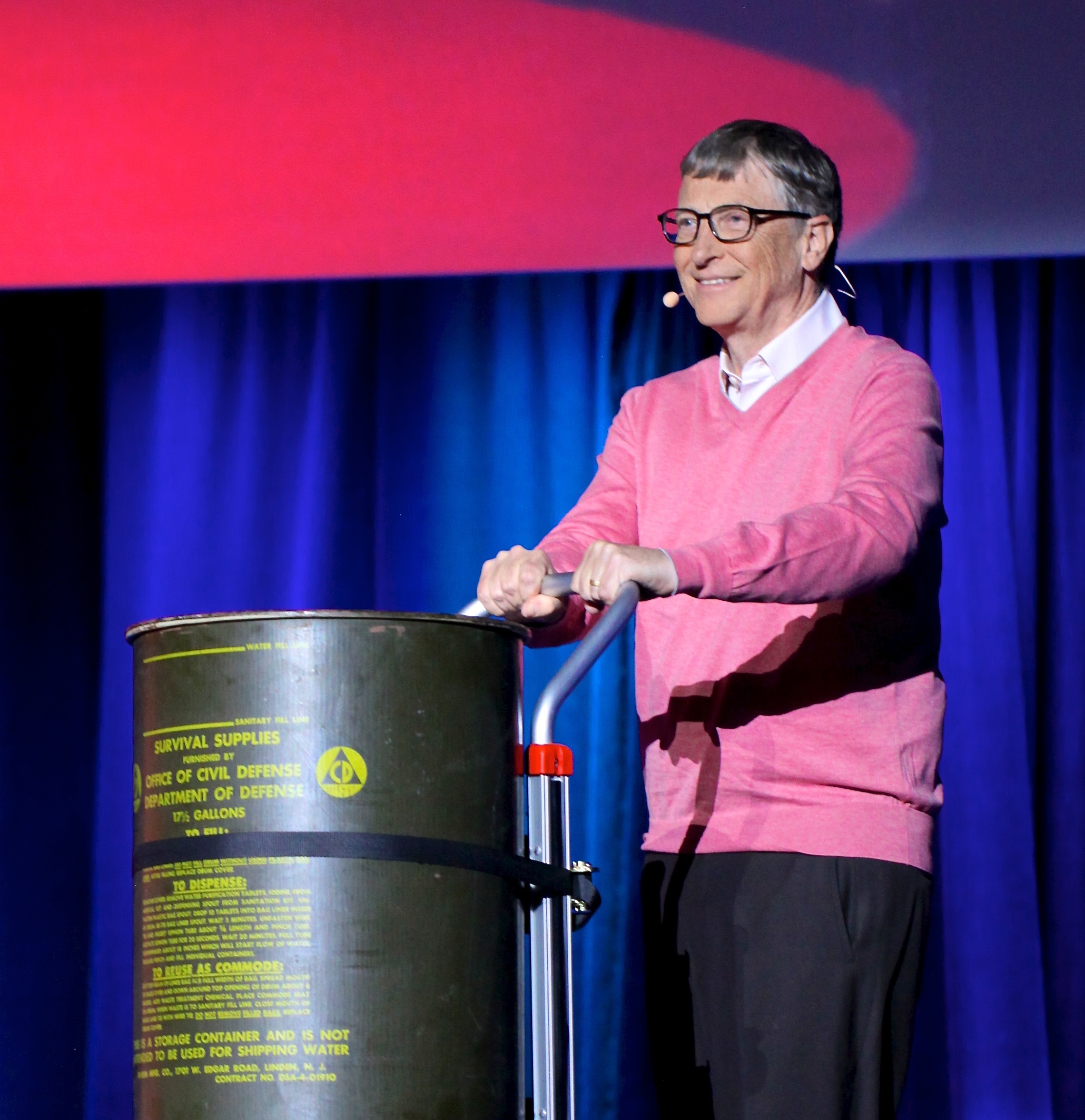
Gates published a follow-up to his 2015 pandemic warning, outlining a concrete plan for global pandemic preparedness including a permanent international outbreak response team, disease surveillance networks with near-real-time detection, and standing vaccine manufacturing capacity. He estimated the full plan would cost approximately $1 billion per year — describing it as the cheapest insurance policy humanity could buy given the trillions of dollars in economic damage caused by COVID-19.
2021
ProPublica's 2021 'Secret IRS Files' series, based on a trove of leaked tax data for thousands of the wealthiest Americans, reported that billionaires — including Bill Gates — legally paid income taxes amounting to only a small fraction of their soaring fortunes. ProPublica's analysis put the 25 richest Americans' collective 'true tax rate,' measured against their wealth growth, at about 3.4 percent; Gates's reported effective income-tax rate, around 18 percent, was higher than many peers but still modest relative to his gains. The reporting drew attention because Gates has publicly called for the rich to pay more in taxes. The leak prompted a federal investigation into its source.
2021
In October 2021, Bill Gates's eldest child, Jennifer Gates — a Stanford graduate then in medical school — married Egyptian-born Olympic show jumper Nayel Nassar in a reported $2 million weekend celebration at the family's equestrian estate in North Salem, New York, beginning with a Muslim ceremony. The wedding came months after the Gateses announced their divorce, with both Bill and Melinda in attendance. The couple, who met through the elite horse-jumping circuit Gates had heavily invested in for his daughter, later made him a grandfather.
2021
A May 2021 New York Times investigation reported that, over many years, Bill Gates had pursued women who worked for him at Microsoft and the Gates Foundation. In one documented 2006 episode, after a female Microsoft employee gave a presentation, Gates emailed her to ask her to dinner — writing, 'If this makes you uncomfortable, pretend it never happened'; the woman, who was uncomfortable, did exactly that. The reporting, published alongside news of a board inquiry into a prior affair, described a pattern of behavior in work settings; a spokesperson for Gates disputed characterizations that he had engaged in misconduct. The account complicated his carefully managed public image.
May 2021
In May 2021, The Wall Street Journal and The New York Times reported that Microsoft's board had, in late 2019, retained an outside law firm to investigate a concern that Bill Gates had pursued an intimate relationship with a female Microsoft employee around the year 2000. Gates resigned from the Microsoft board in March 2020 while the review was underway, and also left the board of Berkshire Hathaway. A spokeswoman for Gates said the affair 'ended amicably' nearly two decades earlier and that his board departure was unrelated to the inquiry, attributing it to his wish to focus on philanthropy. The reporting, which followed the announcement of his divorce, also described accounts of Gates behaving inappropriately toward women in work settings — characterizations his spokesperson disputed.
2021
In his 2021 book 'How to Avoid a Climate Disaster', Bill Gates stated explicitly that all rich countries should shift to 100 percent synthetic beef to reduce the methane and land-use emissions from cattle livestock. Gates cited his investments in Impossible Foods and Beyond Meat as evidence the products had become commercially viable and argued consumers 'can get used to' any remaining taste difference. The statement made Gates one of the most prominent public voices calling for a mandated protein transition in developed economies.
2021
Throughout 2021, Bill Gates addressed his relationship with Jeffrey Epstein in multiple high-profile media interviews — including with CNN, the Wall Street Journal, and other outlets — consistently expressing regret and maintaining that his meetings were confined to philanthropic discussions. Gates acknowledged the association had caused serious personal and reputational damage. He stated he was unaware of Epstein's criminal conduct and that he accepted responsibility for the poor judgment of entering the relationship.
August 2021
In a CNN interview, Bill Gates described his meetings with Jeffrey Epstein as 'a huge mistake' and said he had met Epstein hoping he could generate 'literally billions of dollars going to global health,' which Gates said proved to be 'a mirage.' He emphasized he had no knowledge of Epstein's criminal conduct and expressed regret for having associated with him. The interview was his most direct and extended public accounting of the relationship.
May 3, 2021
Bill and Melinda Gates announced their divorce in a joint statement: 'After a great deal of thought and a lot of work on our relationship, we have made the decision to end our marriage.' The couple had been married since January 1, 1994. Both stated they would continue co-chairing the Bill & Melinda Gates Foundation. The divorce settlement was finalized in August 2021. Subsequent reporting by the Wall Street Journal, New York Times, and other outlets identified the Epstein relationship as a significant contributing factor.
May 2021
The Wall Street Journal reported that Melinda Gates had met with divorce lawyers in 2019, partly in response to Bill Gates's documented relationship with Jeffrey Epstein. The WSJ cited Melinda's discomfort with the Epstein meetings as a significant factor in her decision to explore divorce. The article was published the same week the couple announced their separation, and Melinda later confirmed in a CBS interview that the Epstein relationship had been a contributing factor.
February 2021
In an interview with MIT Technology Review timed to the release of 'How to Avoid a Climate Disaster,' Gates stated that all wealthy nations should move to 100% synthetic beef, arguing that livestock-derived methane is one of the most potent short-term climate forcing agents and that the rich world can afford to make the transition without risking food security. He acknowledged that the poorest 80 countries would not shift to synthetic meat and that the taste of plant-based alternatives still needed improvement, but said that regulatory pressure and innovation would eventually make synthetic beef indistinguishable from conventional beef in high-income markets.
May 3, 2021
Bill and Melinda Gates announced their divorce after 27 years of marriage in simultaneous statements on May 3, 2021, stating they had grown apart and no longer believed they could grow together as a couple. Their divorce was finalized in August 2021. Both initially remained co-chairs of the Gates Foundation, though Melinda subsequently resigned in 2024 after receiving $12.5 billion in assets as part of the settlement.
February 16, 2021
Gates published 'How to Avoid a Climate Disaster,' laying out a comprehensive framework for eliminating greenhouse gas emissions by mid-century. The book debuted at number one on the New York Times bestseller list and drew wide coverage for its emphasis on hard-to-decarbonize sectors — steel, cement, aviation, and agriculture — that he argued received insufficient attention compared to electricity and transport. Gates called for massive investment in innovation alongside deployment of existing clean technologies.
September 2020
William H. Gates Sr., the prominent Seattle attorney and civic leader who fathered the Microsoft co-founder, died on September 14, 2020, at age 94, of Alzheimer's disease at his home on Hood Canal, Washington. He helped launch and shape the family's philanthropy — establishing the William H. Gates Foundation in 1994, a precursor to the Bill & Melinda Gates Foundation — and served for years as its co-chair, lending it early credibility and judgment. A longtime advocate for the estate tax and progressive causes, he authored books including 'Showing Up for Life.' Bill Gates wrote that nearly everything he did was shaped by his father's example; the elder Gates's Alzheimer's also helped motivate Bill's later funding of dementia research.
2020
During the COVID-19 pandemic, Bill Gates became the central figure of a baseless conspiracy theory claiming he planned to use vaccines to implant tracking microchips in people. The claim — repeatedly debunked by fact-checkers — spread so widely that polls in 2020 found roughly one in three Americans believed it. Gates called the theories 'so stupid' and 'tragic,' warning they could discourage life-saving vaccination.
2020
In 2020 reports claimed Bill Gates had commissioned 'Aqua,' a $645 million hydrogen-powered superyacht concept — a claim the designer, Sinot, flatly denied, saying it had no business relationship with Gates. Years later, a real hydrogen-powered superyacht built by Dutch shipbuilder Feadship (Project 821, named 'Breakthrough') was widely reported to belong to Gates, though it was never officially confirmed — a fitting tangle for a climate advocate's reputed eco-yacht.
2020
Bill Gates's father, William H. Gates Sr. (1925-2020), was a prominent Seattle attorney and civic leader whose values deeply shaped his son. After co-founding a major law firm, Gates Sr. helped lead the Bill & Melinda Gates Foundation as co-chair, guiding its early grantmaking, and championed causes including public education and a more progressive estate tax. He wrote the book 'Showing Up for Life,' and his son has repeatedly credited him as a model of integrity and service. Gates Sr. died in September 2020 at age 94.
April 2020
In interviews during the early months of the COVID-19 pandemic, Gates praised China for making data about the outbreak accessible to the international scientific community and said China had 'done a lot of things right' in its response. He emphasized China's role as a potential partner in vaccine and treatment development. The comments generated debate, with critics noting China's initial delays in disclosing the outbreak's severity to international health authorities.
2019
Bill Gates has repeatedly been named the world's most admired man in YouGov's global survey, topping the poll every year since the firm began ranking men and women separately in 2015 — ahead of figures such as Barack Obama and Jackie Chan. The 2019 survey alone polled more than 42,000 people across 41 countries. The recurring No. 1 ranking reflected the global reputation Gates built through the Gates Foundation, even as he also became a lightning rod for conspiracy theories.
2019
In September 2019 Netflix released 'Inside Bill's Brain: Decoding Bill Gates,' a three-part documentary by Oscar-winning director Davis Guggenheim that explored Gates's mind, his problem-solving, and projects from sanitation to nuclear energy. Drawing on extensive interviews with Gates, Melinda, and those close to them, the series offered an intimate portrait of how the Microsoft co-founder thinks — and became one of the most prominent screen treatments of his post-Microsoft life as a philanthropist.
September 2019
In a September 2019 interview with Axios on HBO following the New Yorker's MIT exposé, Bill Gates stated: 'I wish I hadn't had those dinners' with Epstein and 'I made a mistake in judgment' by engaging with him. Gates maintained that the meetings were solely to explore philanthropic fundraising and that he had not socialized with Epstein in any other context. He defended the Gates Foundation's conduct, stating that no foundation grant had been directed by Epstein and that the relationship had not influenced philanthropic decisions.
October 2019
According to reporting by The Wall Street Journal and corroborated by CNN, Melinda Gates first consulted divorce lawyers in October 2019 — the same month The New York Times published its detailed investigation of Bill Gates's meetings with Jeffrey Epstein. Melinda told close friends she was troubled and saddened by the extent of the relationship, according to people familiar with her thinking cited by WSJ. Bill and Melinda Gates announced their divorce in May 2021; Melinda Gates later stated the Epstein association was a factor in her decision.
August 2019
Days before his death in August 2019, Jeffrey Epstein added Boris Nikolic — Bill Gates's longtime Gates Foundation science advisor and personal friend — as an executor of his estate in a last-minute codicil to his will, signed two days before Epstein's death. Nikolic told reporters he was blindsided and would not serve. Nikolic had accompanied Gates on multiple documented meetings with Epstein, including the 2012 Oslo trip and the March 2013 flight on Epstein's jet. The will codicil became evidence in ongoing civil litigation brought by Epstein victims.
2019
Following The New York Times's October 2019 investigation into Bill Gates's meetings with Jeffrey Epstein, Melinda Gates consulted divorce attorneys, according to subsequent reporting by The Wall Street Journal published in May 2021. The Epstein coverage was cited alongside other concerns as contributing to the marriage's breakdown. The couple continued working together at the Gates Foundation for another year and a half before publicly announcing their divorce in May 2021.
October 12, 2019
The New York Times published a major investigation documenting that Bill Gates met with Jeffrey Epstein at least six times between 2011 and 2014, including multiple visits to Epstein's Manhattan townhouse where Gates stayed late into the evening. The investigation drew on flight records, email correspondence reviewed by the Times, and interviews with people who attended the meetings. It was the first comprehensive public accounting of the extent of the Gates-Epstein relationship.
August 10, 2019
Jeffrey Epstein was found dead in his cell at the Metropolitan Correctional Center in New York City. The New York City Medical Examiner ruled the cause of death as suicide by hanging. Epstein's death triggered immediate public controversy given the high-profile nature of his case and the failure of prison surveillance systems the night he died. Two federal prison guards responsible for watching Epstein were later charged with falsifying records.
August 2019
Following Epstein's arrest and death, Bill Gates acknowledged through a spokesman that he had met with Epstein on several occasions, stating the meetings were solely about philanthropy. Gates said he had hoped Epstein could facilitate large-scale charitable giving but that the relationship had proved fruitless. He said he deeply regretted the association and had no knowledge of Epstein's criminal activities.
August 2019
Jeffrey Epstein's final will, amended just two days before his death, named Boris Nikolic — Bill Gates's former chief science adviser — as a backup executor of his estate. Bloomberg News reported the designation; Nikolic said he was 'shocked and disturbed' by the news and had no intention of serving. Nikolic had not been in contact with Epstein for years. The revelation underscored the depth of the connections between Epstein's network and Gates's close circle.
July 6, 2019
Jeffrey Epstein was arrested at Teterboro Airport on federal charges of sex trafficking of minors and conspiracy, based on evidence that he had operated a trafficking network involving dozens of underage girls over more than two decades. The arrest triggered widespread scrutiny of Epstein's extensive network of wealthy and prominent associates — including his documented meetings with Bill Gates — and prompted major media investigations into who had enabled him.
2018
Bill Gates calls himself an 'impatient optimist,' and few books capture his worldview like Steven Pinker's data-driven arguments that human life has steadily improved. Gates declared Pinker's 'Enlightenment Now' (2018) his 'new favorite book of all time,' and the year before had given every U.S. college graduate who wanted one a free digital copy of Pinker's 'The Better Angels of Our Nature,' calling it the most inspiring book he'd read. His evangelism for measurable human progress underpins how he frames the Gates Foundation's mission.
2018
In remarks captured on video and reported in May 2018, Bill Gates recounted that in two meetings (December 2016 and March 2017) President Donald Trump had asked him to explain the difference between HIV and HPV — two distinct viruses 'rarely confused with each other,' Gates noted. Gates also said Trump had floated the idea of his serving as White House science adviser, a role Gates declined as 'not a good use of my time.' The anecdote drew wide attention as a candid, unflattering glimpse of the president's grasp of science policy.
October 2018
Paul Allen, who co-founded Microsoft with his boyhood friend Bill Gates in 1975, died on October 15, 2018, at age 65 from complications of non-Hodgkin's lymphoma. Gates paid tribute in a Wall Street Journal essay, writing that 'personal computing would not have existed without him' and that 'Paul deserved more time in life.' Their bond had been complicated — Allen's memoir had aired old grievances — but Gates mourned a friendship that began in a school computer room and changed the world. Allen left a multibillion-dollar legacy spanning sports teams, brain science, and the arts.
2018
A self-described frugal billionaire in some respects, Bill Gates has spent lavishly to support his eldest daughter Jennifer's competitive show-jumping career. Beginning in 2013 he assembled a roughly $38 million equestrian compound by buying up much of a single street in Wellington, Florida — the heart of the U.S. show-jumping circuit — and in 2018 reportedly gave Jennifer a 124-acre, roughly $16 million horse estate in North Salem, New York. The spending stood in some contrast to Melinda French Gates's description of raising their children with a 'middle class' ethos; Jennifer, now a physician, is married to Olympic equestrian Nayel Nassar.
2018
In 2018 Bill Gates made a guest appearance as himself on the hit CBS sitcom 'The Big Bang Theory,' in an episode in which the starstruck characters scramble to meet him. Playing along with his nerd-icon image, the cameo reflected Gates's enduring fame and his comfort poking fun at himself in popular culture decades after founding Microsoft.
2017
Despite building his fortune on personal computing, Bill Gates has described strictly limiting his own children's technology use: he did not let any of his three kids have a cell phone until they turned 14, banned phones at the dinner table, and set screen-time cutoffs before bed. (He has also said the household leaned away from Apple products.) Gates's cautious, screen-limiting parenting — echoed by other technology leaders — has been widely cited in debates over children and smartphones.
2017
Bill Gates teamed up with tennis great Roger Federer for the 'Match for Africa' charity exhibitions — in Seattle in 2017 and San Jose in 2018 — playing celebrity doubles before sell-out crowds to raise money for children's education in Africa through the Roger Federer Foundation. The events raised millions of dollars and showcased an unlikely, crowd-pleasing partnership between the billionaire and the champion.
2016
The decades-long partnership between Bill Gates and Steve Ballmer — friends since Harvard, then chief executives who built Microsoft together — cooled after Ballmer stepped down as CEO in 2014. Ballmer later said the two had 'drifted apart,' rooted in a 'fundamental disagreement' over whether Microsoft should build its own hardware and how aggressively to chase the smartphone market. 'Microsoft was kind of the thing that really bound us,' Ballmer reflected; 'since I've gone, we really have drifted a little bit.' Both have said they remain on cordial terms despite the rift.
April 2015
Gates delivered a widely watched TED Talk warning that the world's greatest risk of mass casualties in the coming decades was not a nuclear war but a highly infectious virus for which humanity was unprepared. He called for robust investment in epidemic readiness — health worker training, reserve medical corps, and accelerated vaccine research platforms. The talk has accumulated more than 40 million views and was cited extensively during the COVID-19 pandemic as having directly predicted the crisis years in advance.
March 2015
Gates gave a TED Talk titled 'The Next Outbreak? We're Not Ready,' warning that the world was dangerously underprepared for a global pandemic and that an airborne pathogen could kill tens of millions of people. He called for a permanent international response force, rapid diagnostics, and vaccine manufacturing capacity — investments that did not materialize before COVID-19 emerged in 2020. The talk was viewed hundreds of millions of times after the pandemic began, drawing both praise for his foresight and scrutiny of his influence in global health policy.
2014
For one of the world's richest people, Bill Gates is famously unflashy about everyday things. He has long worn inexpensive Casio watches — once cheerfully noting a roughly $10 model — even as he paid more than $30 million for a Leonardo da Vinci notebook. Gates has also said he still washes the dishes himself most nights at home. The contrast — a $10 watch and a Codex, dish duty and a Gulfstream — became a favorite illustration of his idiosyncratic relationship with money.
2014
Bill Gates is famously fueled by Diet Coke. He has said that once he's at the office he typically cracks open a can and drinks three or four over the course of the day — a habit he estimated adds up to around 35 pounds of aluminum cans a year. The soft drink is such a fixture that it routinely appears beside him in interviews and on his Netflix series, a small, well-known quirk of one of the world's richest people.
2014
In 2014, Bill Gates weighed in on the year's most-discussed economics book, Thomas Piketty's 'Capital in the Twenty-First Century.' In a detailed review, Gates agreed that extreme wealth inequality is a genuine problem and that capitalism will not fix it on its own — but argued against Piketty's proposed tax on wealth, favoring a progressive tax on consumption instead. By Piketty's account, Gates told him: 'I love everything that's in your book, but I don't want to pay more tax.' The exchange crystallized Gates's particular brand of inequality-conscious capitalism.
October 2014
In late September 2014 Jeffrey Epstein emailed MIT Media Lab director Joi Ito stating that Gates wanted a write-up on a science program, and weeks later Gates informed Ito of a $2 million donation to the Media Lab. The gift was received October 17, 2014. An internal Media Lab email from Ito described it as a gift from Bill Gates directed by Jeffrey Epstein. A Gates spokesperson disputed this characterization. The episode was re-examined after Epstein's 2019 arrest and MIT's investigation found Epstein more deeply embedded in its fundraising than previously disclosed.
2013
In February 2013 Bill Gates held his first Reddit 'Ask Me Anything,' fielding questions on everything from his favorite book to products Microsoft never shipped, and verifying his identity with a playful photo. The session was a hit and became a recurring tradition, with Gates returning for annual AMAs that made him one of the platform's most prominent guests. The format showcased a more candid, accessible side of the billionaire as he leaned into public engagement through his Gates Notes platform.
September 2013
In September 2013, Bill Gates had dinner with Jeffrey Epstein in New York City, according to reporting by The New York Times based on emails and calendar records. By this date, Epstein had served his 2008 Florida sentence and been registered as a sex offender in multiple states. The dinner was one of several documented in-person meetings between the two men over a three-year period from 2011 to 2014. Gates acknowledged the meetings but said he had been unaware of the full extent of Epstein's crimes.
March 2013
In March 2013, Jeffrey Epstein arranged a private meeting in New York between Bill Gates and two members of the Norwegian Nobel Committee, according to NYT reporting. Internal emails quoted in the story show Epstein telling Gates the meeting was intended to improve Gates's profile for a Nobel Peace Prize nomination. Epstein styled himself as a power broker who could leverage connections to international scientific and political institutions on behalf of his wealthy associates.
March 1, 2013
On March 1, 2013, Bill Gates flew on Jeffrey Epstein's private Gulfstream jet from Teterboro Airport, New Jersey, to Palm Beach, Florida, according to flight records reported by The New York Times. Gates was accompanied by Boris Nikolic. A Gates spokesperson confirmed the flight but said Gates did not know Epstein's plane would be used. The trip post-dated Epstein's 2008 sex-offender conviction by four years and occurred while civil lawsuits from Epstein's victims were ongoing.
2013
Melinda Gates met Jeffrey Epstein on one occasion and later described the experience as deeply disturbing. In a 2022 CBS interview she stated: 'I had one meeting with him. I wanted to see who this man was, and I regretted it from the second I walked in the door. He was abhorrent. He was evil personified. I had nightmares about it afterwards.' She told Bill she was uncomfortable with his continued contact with Epstein.
March 2013
Flight records reviewed by The New York Times documented that Bill Gates flew on Jeffrey Epstein's private Gulfstream jet in March 2013, traveling from Teterboro Airport in New Jersey to Palm Beach, Florida. The flight was among the evidence used to document the ongoing relationship between the two men. Gates later acknowledged the meetings but stated he had no awareness of Epstein's criminal conduct.
Summer 2013
In summer 2013 Jeffrey Epstein sent his first email to Gates about establishing a donor-advised fund, claiming over $10 billion in art alone that wealthy individuals would donate to a DAF for tax reasons. The correspondence included Gates's top deputies — the head of his family office and the Gates Foundation's general counsel — and featured drafts of the proposed vehicle's structure and promotional materials. The emails were later published as evidence of Epstein's systematic effort to embed himself in Gates's philanthropic infrastructure.
August 2012
In August 2012, Bill Gates traveled to Oslo, Norway, with Jeffrey Epstein — along with Gates Foundation science advisor Boris Nikolic — where they met with Norwegian scientists and businesspeople. Emails reviewed by The New York Times showed that Epstein organized the itinerary. The visit included meetings at the Norwegian Academy of Science and Letters; Epstein framed the trip as positioning Gates for a Nobel Peace Prize nomination by cultivating the Norwegian scientific community.
2012
Boris Nikolic, Gates's chief science adviser, served as the operational coordinator of Gates-Epstein meetings — rearranging Gates's schedule and facilitating introductions. Email communications from Nikolic during this period, later reviewed by journalists, referenced both the philanthropic meetings and personal social contacts within Epstein's network. After Gates distanced himself from Epstein, Nikolic's central role as facilitator became a significant focus of subsequent investigative reporting.
2012
During their meetings, Jeffrey Epstein proposed establishing a Gates Foundation-backed donor-advised fund he claimed could attract billions of dollars in charitable contributions from ultra-high-net-worth individuals. Gates and his advisers considered the proposal but it was never implemented. Reporting later revealed Epstein used claims of a close relationship with Gates to impress other potential clients and associates, inflating the nature of their actual connection.
April 2011
In his 2011 memoir 'Idea Man' (excerpted in Vanity Fair), Microsoft co-founder Paul Allen wrote that in December 1982 — while he was being treated for Hodgkin's lymphoma — he overheard Bill Gates and Steve Ballmer discussing how to dilute his ownership stake by issuing themselves and others stock options. Allen confronted them, the plan was dropped, and he soon stepped back from day-to-day work at Microsoft, though he kept his shares and became a billionaire. Allen wrote that Gates and Ballmer later apologized, and portrayed Gates as relentlessly competitive and sometimes harsh. Gates responded that his recollection of some events differed but praised Allen's contributions; the book complicated the public image of Microsoft's founding friendship.
May 2011
In May 2011, Bill Gates dined with Jeffrey Epstein, Larry Summers (former Harvard president and Treasury Secretary), and Jes Staley (then JPMorgan Private Bank chief executive) at Epstein's Manhattan townhouse to discuss creating a multibillion-dollar charitable fund that would pool contributions from ultra-wealthy clients introduced by Epstein. According to The New York Times and Bloomberg reporting on Epstein's JPMorgan relationship, Epstein positioned himself as the broker for this philanthropic vehicle. The fund was never established; Jes Staley later faced regulatory action over his relationship with Epstein.
March 2011
In March 2011, Bill Gates and Jeffrey Epstein interacted at the TED Conference in Long Beach, California, and subsequently scheduled a series of follow-up meetings, according to NYT reporting corroborated by Gates Foundation internal emails reviewed by journalists. The TED encounter deepened the relationship and led to Epstein visiting the Gates Foundation's Seattle headquarters, where he met with programme officers. Gates's office later described these interactions as attempts to use Epstein's access to billionaires to raise philanthropic funding.
January 2011
According to reporting by The New York Times in October 2019, Bill Gates met Jeffrey Epstein for the first time at Epstein's Manhattan townhouse on East 71st Street in January 2011 — two years after Epstein's 2008 Florida conviction for soliciting prostitution from a minor. Gates attended alongside senior Gates Foundation executives including Boris Nikolic (science advisor) and the Foundation's chief financial officer. The meeting was arranged to explore whether Epstein could help Gates and the Foundation solicit large philanthropic contributions from ultra-wealthy donors for global health initiatives.
2011
Bill Gates attended a private dinner at Jeffrey Epstein's Manhattan townhouse on East 71st Street. The New York Times described the event as including Nobel laureates and other guests, with Gates staying late into the evening. This was the first of at least six documented in-person meetings between Gates and Epstein between 2011 and 2014. Gates later said he hoped Epstein could facilitate large-scale philanthropic introductions to wealthy donors.
January 2011
Gates first met convicted sex offender Jeffrey Epstein at a party at Epstein's Manhattan townhouse in January 2011 — more than two years after Epstein's release from a Florida jail following his 2008 conviction for soliciting prostitution from a minor. Epstein had pursued the Gates meeting through an aggressive campaign involving mutual contacts. Gates subsequently met Epstein at least five more times through 2013-2014, including at a conference in Long Beach, a gathering at Epstein's townhouse with Larry Summers, a trip to Palm Beach on Epstein's private jet, and a dinner in New York.
February 2010
In his February 2010 TED talk 'Innovating to Zero,' about cutting carbon emissions, Bill Gates noted that better vaccines, health care, and reproductive services could help lower the rate of population growth 'by perhaps 10 or 15 percent' — invoking the well-established demographic pattern in which falling child mortality leads families to choose to have fewer children. Years later the clip was selectively edited and recirculated to falsely claim Gates wanted to use vaccines to 'depopulate' the planet. Fact-checkers including PolitiFact, FactCheck.org, and Africa Check have repeatedly rated the claim false, but it became one of the most durable pieces of misinformation about Gates, foreshadowing the wave of pandemic-era conspiracy theories that would later make him a prime target.
2010
Around 2010, as he stepped back from day-to-day work at Microsoft, Bill Gates launched Gates Notes, a personal website where he shares book reviews, reflections on science and global health, and his closely watched annual letters. The platform helped Gates build a public voice as a philanthropist and self-described optimist, recommending dozens of books a year and explaining topics from disease eradication to clean energy in plain language. Gates Notes became one of the most-read personal sites of any business figure and a key channel for shaping his post-Microsoft image.
2010
According to reporting by The New York Times, Jeffrey Epstein directed associates to pursue an introduction to Bill Gates through Boris Nikolic, Gates's chief science adviser. Epstein represented himself as a major philanthropist with connections to wealthy donors who could advance Gates's global health initiatives. Nikolic subsequently became the primary intermediary between Gates and Epstein, arranging meetings and coordinating communications over the following years.
2010
Gates launched GatesNotes, a personal blog for sharing reading recommendations, philanthropic thinking, and views on global challenges. The platform became one of the most widely read personal blogs in the world, with annual letters and book reviews regularly trending internationally. In a 2015 TED Talk posted to GatesNotes, Gates warned of an unprepared world facing a deadly pandemic — a prediction that drew enormous renewed attention when COVID-19 emerged five years later.
July 2008
After a two-year gradual transition, Gates formally left his full-time role as Chief Software Architect at Microsoft to devote the majority of his working life to the Gates Foundation. He remained non-executive Chairman of the Board until 2014. Gates later described the transition as the hardest professional decision of his life, saying that the urgency of preventable disease and poverty made continuing as a software executive feel unjustifiable.
June 7, 2007
Gates delivered the commencement address at Harvard University 32 years after leaving without graduating, on the same day the university awarded him an honorary degree. He opened his speech by calling himself 'a bad example as a role model for getting a Harvard degree,' drawing laughter from the crowd. He used the address to urge graduates to apply their educations to problems of global inequity, asking them to measure their lives not by wealth but by the impact they made on people who never had their advantages.
2006
Bill Gates publicly clashed with the One Laptop Per Child initiative, the nonprofit led by MIT's Nicholas Negroponte that aimed to put rugged, sub-$100 laptops in the hands of children in poor countries. Gates derided the early machines — questioning their tiny screens and hand-crank power — while Microsoft promoted low-cost Windows options instead. The dispute highlighted a genuine debate over how technology could best serve global development, a question central to Gates's own later philanthropy.
2006
Melanie Walker, a neuroscientist who had worked as Jeffrey Epstein's personal science adviser since the late 1990s, served as a program officer at the Bill & Melinda Gates Foundation and later as a deputy director at Gates's investment firm bgC3. Reporting after Epstein's 2019 arrest revealed the overlapping relationship, raising questions about the information flow between Epstein's network and Gates's organizations. Walker's dual role became one of the most closely examined personal connections between the two men's worlds.
1999
Bill Gates so coveted the Porsche 959 — a 1980s technological tour de force — that he imported one to the United States even though it had never been crash-tested for U.S. roads. Customs impounded the car, and it sat in storage for roughly 13 years while Gates paid ongoing fees, unable to legally drive it. The standoff helped spur the 'Show or Display' law, enacted in 1999, which lets collectors import historically or technologically significant vehicles under mileage limits — finally freeing Gates's 959.
1998
Bill Gates made an animated cameo on 'The Simpsons' in the 1998 episode 'Das Bus,' in which he 'buys out' Homer Simpson's fledgling internet company — by having his goons trash the office — quipping, 'I didn't get rich by writing a lot of checks.' The appearance was one of many pop-culture nods that cemented Gates's status as the era's archetypal tech billionaire.
1998
In 1998 Bill Gates paid about $36 million for Winslow Homer's 1885 seascape 'Lost on the Grand Banks,' then a record price for an American painting. The purchase — the last major Homer seascape in private hands — joined an art collection that also included Leonardo da Vinci's Codex Leicester, reflecting Gates's taste for historically significant works.
1998
During the U.S. government's landmark antitrust case against Microsoft, Bill Gates gave a videotaped deposition in 1998 that became infamous for his combative, evasive demeanor — quibbling over the meaning of common words and claiming not to recall key emails. Clips played in court drew laughter and damaged Microsoft's position, contributing to Judge Thomas Penfield Jackson's findings against the company. The deposition remains one of the most scrutinized moments of Gates's career as a corporate leader.
1998
In February 1998, as he arrived to meet business and government leaders in Brussels, Bill Gates was ambushed and hit in the face with cream pies by Belgian 'entarteur' Noël Godin and his accomplices, who targeted Gates as a symbol of capitalist power. A bemused Gates wiped the cream from his glasses and went on with his planned speech on technology and education; he declined to press charges, and Belgian police released the culprits. The widely circulated images became one of the most memorable pranks ever pulled on a tech billionaire.
1997
A 1997 TIME profile by Walter Isaacson revealed that, even after marrying Melinda in 1994, Bill Gates maintained a tradition of spending one long weekend each spring with his former girlfriend — software entrepreneur and venture capitalist Ann Winblad — at her beach cottage on the Outer Banks of North Carolina, where, Gates said, they walked the beach, rode dune buggies, and talked about the future. Gates said Melinda was comfortable with the arrangement, and that before proposing to Melinda he had asked Winblad's blessing. (Contrary to later viral claims, it was not a clause in a 'marriage contract.') The unusual arrangement drew renewed attention after the Gateses announced their divorce in 2021.
1997
By 1997 Bill Gates had completed Xanadu 2.0, his roughly 66,000-square-foot estate in Medina, Washington, named after the mansion in 'Citizen Kane.' Built over seven years into a hillside above Lake Washington, the high-tech home featured a 60-foot pool with an underwater sound system, a domed library housing his Codex Leicester, sensor-controlled lighting and climate, and a trampoline room. Reportedly costing more than $60 million to build and later assessed at well over $100 million, it became an emblem of Gates-era tech wealth.
1995
For decades Bill Gates has practiced a ritual he calls 'Think Week' — retreating alone, often to a secluded cabin, twice a year to do nothing but read stacks of papers, books, and proposals and think deeply about technology and the future. At Microsoft, the ideas he hatched on Think Weeks shaped company strategy, including its pivotal embrace of the internet. The habit, widely emulated by other executives, reflects Gates's lifelong identity as a voracious, self-directed learner.
November 1995
Gates published 'The Road Ahead,' offering his vision of how information technology would transform society, commerce, and daily life. The book debuted at number one on the New York Times bestseller list and remained on the list for 18 weeks. A revised second edition was issued in 1996 with expanded coverage of the internet, which Gates had underestimated in the original manuscript — an admission he addressed directly in the new preface.
1994
For his New Year's Day 1994 wedding to Melinda French on the Hawaiian island of Lanai, Bill Gates went to extraordinary lengths to guard his privacy: he reportedly booked all the rooms of the island's main hotel so journalists could not stay nearby, and hired all the helicopters on neighboring Maui to stop photographers from flying overhead. The measures worked — the ceremony, attended only by family and close friends (Warren Buffett among them), stayed almost entirely shielded from the press, an early sign of the lengths the Gateses would go to control their public exposure.
1994
In a 1994 Playboy interview, Bill Gates coyly addressed past experimentation with LSD, deflecting specifics with lines such as 'my errant youth ended a long time ago' and, to one acid anecdote, 'that was on the other side of that boundary' — while quipping that he 'never missed a day of work.' Gates was more explicit decades later in his 2025 memoir 'Source Code,' acknowledging he had taken the psychedelic more than once as a young man and joking with Steve Jobs about it. The disclosures are a reminder that, like several pioneers of the personal-computer era, Gates dabbled in the counterculture of his youth.
1994
Mary Maxwell Gates — Bill Gates's mother and an influential civic leader who had helped connect Microsoft to IBM — died of breast cancer in June 1994 at age 64, just months after attending her son's wedding to Melinda French. A University of Washington regent and the first woman to chair the national United Way's executive committee, she instilled in her son a strong ethic of service and giving that would shape his later philanthropy. Her death deeply affected Gates and helped spur the family's charitable focus.
1994
In 1994 Bill Gates paid $30.8 million at a Christie's auction for the Codex Leicester, a 72-page notebook of Leonardo da Vinci's scientific writings and sketches from around 1506-1510, penned in the artist's famous mirror script — one of the most expensive manuscripts ever sold. Rather than lock it away, Gates had its pages digitized, lent it to museums worldwide, and even adapted images from it into a Windows screensaver, reflecting his fascination with one of history's great curious minds.
January 1, 1994
Bill Gates married Melinda French, a Microsoft product manager he had met at a company dinner in 1987, on New Year's Day on the Hawaiian island of Lanai. Gates famously chartered every helicopter on the island for the weekend to prevent photographers from accessing the ceremony. Their marriage produced three children — Jennifer, Rory, and Phoebe — and became the foundation for decades of shared philanthropic work through the Gates Foundation.
1991
On July 5, 1991, a reluctant Bill Gates met investor Warren Buffett at a gathering hosted by Gates's parents — Gates had assumed he'd have little in common with a stock picker and planned to stay only briefly. Instead the two talked for hours and forged one of business history's most consequential friendships. It led to bridge games, Berkshire board service, and ultimately Buffett's pledge of the bulk of his fortune to the Gates Foundation — a partnership that reshaped global philanthropy.
1991
Bill Gates first met investor Warren Buffett in 1991, when a mutual friend brought them together; Gates expected a brief, dutiful encounter and instead found a kindred mind, sparking one of the most consequential friendships in modern business. The two bonded over bridge, books, and big ideas, and Buffett's influence helped steer Gates toward large-scale philanthropy. In 2006 Buffett pledged the bulk of his fortune to the Gates Foundation, and together they later launched the Giving Pledge.
1987
Bill Gates met Melinda French in 1987, shortly after she joined Microsoft as a product manager, when the two were seated together at a company dinner in New York. They began dating, kept the relationship private for years, and married on January 1, 1994, on the Hawaiian island of Lanai. Their partnership would extend far beyond marriage into the co-founding of the world's largest private philanthropy, until their divorce in 2021.
1981
One of the most famous quotes attributed to Bill Gates — that '640K of memory ought to be enough for anybody,' supposedly said around 1981 — was never actually uttered by him, as far as anyone has documented. Gates has repeatedly and emphatically denied it, calling the idea absurd, yet the apocryphal line endures as shorthand for short-sighted tech predictions.
1980
In Microsoft's early years, Bill Gates drove a punishing, all-hours culture — and himself hardest of all. 'I didn't believe in weekends; I didn't believe in vacations,' he has recalled, saying he pulled repeated all-nighters and 'was obsessed with my work,' even competing with colleagues over who could get by on the least sleep because he 'felt that sleeping a lot was lazy.' Gates later changed his mind — crediting a book on sleep science — and came to regret not making more time for family, but the early ethic shaped Microsoft's intense reputation.
1979
As a Harvard undergraduate, Bill Gates co-authored his only well-known academic paper — 'Bounds for Sorting by Prefix Reversal,' written with professor Christos Papadimitriou and published in 1979 — tackling the so-called 'pancake sorting' problem of how few flips it takes to order a stack of differently sized pancakes. Gates's bound stood as the best known solution for roughly three decades. The paper is a reminder that, before he built a software empire, Gates was a serious mathematical talent.
December 1977
On December 13, 1977, Bill Gates — then 22 and running the young Microsoft out of Albuquerque, New Mexico — was arrested after being pulled over for driving without a license and running a stop sign, reportedly in Paul Allen's car. The booking produced the grinning mugshot that became one of the most recognizable images in tech lore; Microsoft later nodded to it by using the silhouette as a default profile picture in Outlook. It was not Gates's first such incident — he had also been cited in 1975 for speeding and driving without a valid license, reflecting a youthful reputation for fast driving. Snopes and contemporaneous records confirm the mugshot's authenticity.
1975
History's most famous college dropout never exactly dropped out. When Bill Gates left Harvard in 1975 to build Microsoft with Paul Allen, he took a leave of absence rather than formally quitting — and simply never returned, taking advantage of Harvard's flexible leave policy to chase the personal-computer revolution without burning the bridge. Gates finally collected a Harvard degree in 2007 — an honorary one — joking in his commencement address that he could at last tell his father he had gone back and finished.
1975
Gates enrolled at Harvard College in 1973, studying mathematics and computer science, before dropping out in his sophomore year to co-found Microsoft with Paul Allen. The decision came after Allen showed him a magazine cover story on the MITS Altair 8800 and both men believed the window to commercialize a BASIC interpreter would close if they waited. Gates later said he was always confident he could return to finish his degree, and Harvard awarded him an honorary Doctor of Laws in 2007.
1974
Before founding Microsoft, a teenage Bill Gates gained crucial hands-on experience on real-world software. Around 1974, Gates (then on leave from Lakeside School) and Paul Allen were hired by TRW to help debug the computer system managing the Bonneville Power Administration's electrical grid in the Pacific Northwest, earning roughly $165 a week and rooming together in Vancouver, Washington. The intense, high-stakes work sharpened the programming partnership the two would soon turn into Microsoft.
1973
Bill Gates was a standout student long before Microsoft. Graduating from Seattle's elite Lakeside School in 1973, he was a National Merit Scholar and scored 1590 out of 1600 on the SAT before enrolling at Harvard that fall. His gifts — especially in mathematics — were formidable; he would leave Harvard two years later to start Microsoft, but the early-achiever pedigree became part of the legend.
1973
At Harvard, Bill Gates enrolled in Math 55 — a legendary, brutally difficult honors course often called the hardest undergraduate math class in the country. Gates was a gifted mathematician (he later co-authored a genuine research paper on 'pancake sorting'), but being surrounded by even more singularly talented mathematicians helped convince him that his future lay in software and business rather than pure math. He left Harvard in 1975, before graduating, to start Microsoft.
1973
Bill Gates entered Harvard in 1973, where he was a restless student who spent more time in the computer lab and playing poker than in class — and where he met Steve Ballmer, his future Microsoft CEO. In 1975 Gates left Harvard to found Microsoft with Paul Allen, betting that the personal-computer revolution would not wait for him to finish his degree.
1973
As a teenager, Bill Gates scored 1590 out of a possible 1600 on the SAT, a near-perfect result that helped win him admission to Harvard. The score became part of his legend as a prodigiously gifted student — though Gates would famously leave Harvard before graduating to start Microsoft, only receiving an honorary degree decades later.
1972
Bill Gates's first close friend, Kent Evans, died on May 28, 1972, at age 17 in a mountaineering accident, while the two Lakeside School students were planning to spend the summer working on a programming project together. Gates, who has called it 'the only negative thing in my childhood,' was devastated; he and Paul Allen grew closer afterward. Decades later, Gates devoted a moving passage of his memoir to Evans, reflecting on a brilliant friend whose life was cut short before the computing revolution they had dreamed about.
1971
As a Lakeside School student around 1971, Bill Gates helped write the program that scheduled students into classes — and quietly tweaked it to his own advantage. 'By the time I was done, I found that I had no classes at all on Fridays,' Gates later recalled, 'and even better, there was a disproportionate number of interesting girls in all my classes.' The cheeky episode, which he recounted in a 2005 speech at the school, is a favorite anecdote about his teenage knack for bending software to his will.
1970
As a teenager at Seattle's Lakeside School around 1968–1970, Bill Gates and his friends — including Paul Allen — got their first serious computer time from the Computer Center Corporation (C-Cubed). They were caught exploiting bugs in the system to grab extra free time and were banned for a period. The episode ended productively: C-Cubed hired the teenagers to hunt for flaws in its software in exchange for computer access — an early 'ethical hacking' arrangement that gave Gates formative programming experience and, he later said, led to his first real partnership with Allen.
1968
At age 13, Bill Gates wrote his first software program — a tic-tac-toe game in BASIC — on a General Electric time-sharing terminal at the Lakeside School in Seattle. The Mothers' Club had sold rummage-sale proceeds to fund the terminal, giving Gates and Paul Allen their first exposure to interactive computing. Gates later recalled that accessing the computer was the pivotal experience that set the direction of his life.
1955
William Henry Gates III was born on October 28, 1955, in Seattle, into a prominent, competitive family — his father a leading attorney, his mother a civic powerhouse. Nicknamed 'Trey' for the III in his name, young Gates was a voracious reader and fiercely driven, channeling that intensity into computers as a teenager. The combination of an affluent, achievement-oriented upbringing and early access to scarce computer time helped set the stage for the company he would co-found at 19.
2020s
Away from work, Bill Gates is known for an enthusiasm for games — he has spoken about playing the strategy board game Settlers of Catan with family and friends — and for pickleball, the racquet sport he played growing up in the 1960s, long before its 2020s boom. Such hobbies, along with tennis and voracious reading, are part of the famously competitive, puzzle-loving side of Gates's personality.
2010s
Bill Gates is famous for his reading habit, regularly finishing on the order of 50 books a year across science, history, and global development, and publishing his recommendations through his Gates Notes blog and annual summer reading lists. The discipline — rooted in his solitary 'Think Weeks' — has made his book picks influential and reinforced his public image as a lifelong learner.
2000s
Bill Gates is a serious and competitive bridge player, a passion he shares with his close friend Warren Buffett; the two have played together for years and have funded efforts to teach the card game in schools. Gates has competed in tournaments and credits bridge with sharpening the kind of probabilistic, strategic thinking he applies to business and philanthropy.
[RELATED_SUBFILES] · ls ../
node: archive-01 · link: encrypted · uptime: 99.98% · mirror: active
— EOF · nothing here is hidden, only documented —